operating
Cabotage and posted drivers: two rule books on one journey
Regulation 1072/2009 decides how much domestic work a foreign-plated truck may take. Directive 2020/1057 decides when its driver must be paid host-state rates. They are not the same rule.
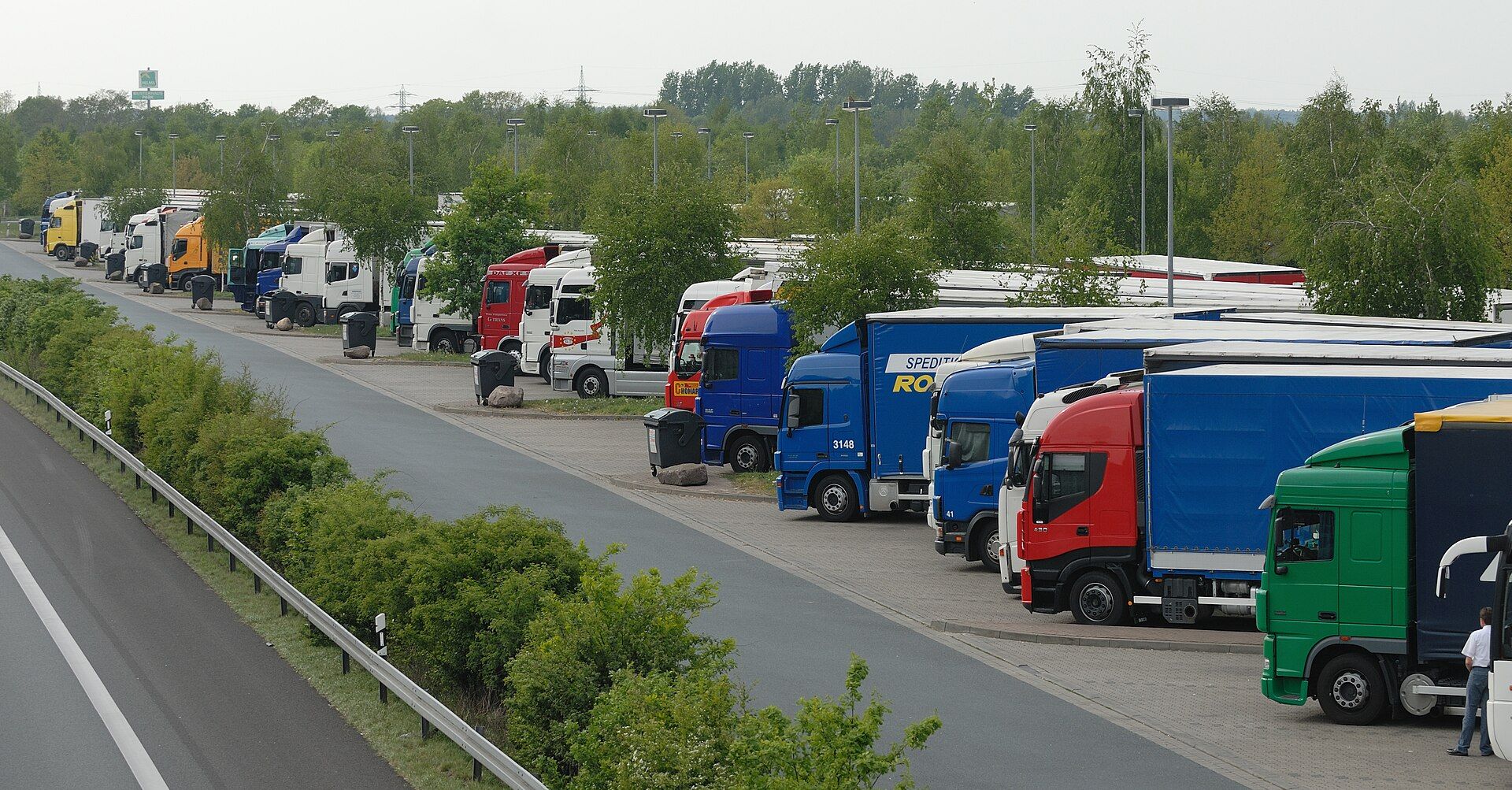
A Lithuanian tractor that unloads in Antwerp and then takes a load from Ghent to Liège is doing two regulated things at once, under two instruments that share neither a definition nor a counting rule nor an enforcement route. Regulation (EC) No 1072/2009 governs how much domestic work the vehicle may take; Directive (EU) 2020/1057 governs what the driver is paid while it takes it. A journey can be lawful cabotage and an undeclared posting at once.
What makes a domestic load lawful cabotage
Article 2(6) of Regulation (EC) No 1072/2009 defines a cabotage operation as national carriage for hire or reward carried out on a temporary basis in a host Member State, which Article 2(3) defines as a state in which the haulier operates other than its own Member State of establishment. The driver’s nationality enters neither definition; the reference point is where the undertaking is established.
Article 8(1) sets one entry ticket — a Community licence, plus a driver attestation where the driver is a third-country national. It is not the only one. Article 8(5) lets any haulier entitled at home to the carriage listed in points (a) to (ca) of Article 1(5), the categories that need no Community licence at all, carry out cabotage of the same kind or with vehicles in the same category. That licence-free band moved on a date of its own: point (c), as replaced by Regulation (EU) 2020/1055, exempted goods vehicles of not more than 3,5 tonnes permissible laden mass until 20 May 2022, and the inserted point (ca) has exempted not more than 2,5 tonnes from 21 May 2022. A 3,2-tonne van has needed a Community licence to caboter since that day and needed none before it; a 2-tonne van still needs none, and Article 8(5) is its route in.
Article 8(2) sets the quota. Once the goods carried in the course of an incoming international carriage have been delivered, the haulier may carry out up to three cabotage operations with the same vehicle, or with the motor vehicle of a coupled combination; and the last unloading before leaving the host state must take place within 7 days from the last unloading of the incoming international carriage.
Three details carry weight. The incoming carriage must be fully delivered first: the Commission’s cabotage Q&A states that where it consists of several consignments, cabotage can only start once all of them have been delivered, and that it may start immediately after the last unloading, including on that day. The quota attaches to the motor vehicle, which is why the same Q&A confirms the operations may be performed with another trailer. And the seven days run from that last unloading, not from the border crossing.
What the three are counted in, however, is not settled at European level. The same Q&A answers that a cabotage operation can in principle involve several loading points, several delivery points or even both, and that it can include one or more consignment notes — but that Member States may limit the number of loading and/or unloading points, within the proportionality bounds it draws from the judgment of 12 April 2018 in Case C-541/16 Commission v Denmark, and it says twice that the precise national rules should always be checked. The quota of three is European law; whether a three-drop run counts as one operation or three is answered in the host state.
The subparagraph most operators have never read
Article 8(2) has a second subparagraph, and it is the part that changes how a European trip is planned. Within the seven-day limit, hauliers may carry out some or all of the permitted operations in any Member State, on condition that they are limited to one cabotage operation per Member State within 3 days of the unladen entry into the territory of that Member State.
It is unread because it is obscure, not because it is new. The consolidated text prints both subparagraphs of Article 8(2) under the base-text marker: this is original Regulation (EC) No 1072/2009 wording, and Article 19 applied Articles 8 and 9 from 14 May 2010, ahead of the rest of the Regulation on 4 December 2011. What Regulation (EU) 2020/1055 did to Article 8, applicable from 21 February 2022, was to insert paragraphs 2a and 4a, replace the first subparagraph of paragraph 3 and amend paragraph 5. Paragraph 2 it left alone.
The three operations are therefore not three operations in the country of delivery. They can be spread across the map, at the price of two constraints. The Commission reads the subparagraph as allowing no more than one cabotage operation in a Member State other than the one of the incoming international transport, and each of those must be completed within three days of entering that state empty — a vehicle arriving loaded is still completing an international carriage. Its worked example is a haulier that delivers into France, performs one cabotage operation there, moves to Germany for a second and to Belgium for a third, with the seven-day clock running throughout.
The four-day cooling-off period
Article 8(2a), also inserted by Regulation (EU) 2020/1055, exists to stop consecutive international carriages being used to build a permanent or continuous presence: hauliers are not allowed to carry out cabotage operations, with the same vehicle, in the same Member State within four days following the end of its cabotage operation in that state.
The Commission’s Q&A sets out how it bites. The four days apply per Member State, and run even where only one operation was performed there before the vehicle left. During them the vehicle may transit that state, stay in it, or run international carriage to and from it; what it may not do is another domestic load there. Days are calendar days, so a last operation on a Monday ends the cooling-off period at 23:59 on the Friday, and cabotage there resumes from 00:00 on Saturday.
The same logic governs the seven-day window: it starts at 00:00 on the day after the incoming carriage and ends at 23:59 on the seventh day, so a Monday delivery must have its cabotage finished by the end of the following Monday. Regulation (EEC, Euratom) No 1182/71 then adds two rules, not one. A period ending on a Saturday, Sunday or public holiday runs on to the last hour of the next working day; and any period of two days or more must include at least two working days, public holidays and weekends not counting as working days. They apply together, which is how the Commission’s worked case reaches its answer: a haulier entering another Member State on a Thursday has a three-day period that would close on the Sunday, is carried to the Monday by the first rule, and runs to Tuesday midnight by the second where the Friday is a public holiday there. Neither rule reaches the four days preceding an international carriage under Article 8(3), which is counted backwards.
The evidence, and the four days before you arrived
Article 8(3) is where cabotage becomes a documentation problem. National haulage by a non-resident haulier is only deemed to comply if the haulier can produce clear evidence of the preceding international carriage and of each consecutive cabotage operation carried out. Seven details are listed for each: sender, haulier and consignee identities with signatures and the delivery date; the place and date of taking over the goods and the place designated for delivery; the goods and the packing; the gross mass or quantity; and the number plates of the motor vehicle and trailer.
The sting is in the rest of Article 8(3). Where the vehicle has been in the host Member State within the four days preceding the international carriage, the haulier must also produce clear evidence of all operations carried out during that period — a retrospective demand about journeys finished before the current job began.
Article 8(4) says no additional document is required, since those details are normally already on the CMR consignment note. But the Commission is explicit that this does not stop authorities using other evidence such as tachograph data, and that border crossings recorded by the second-generation smart tachograph can establish where the vehicle has been — the practical reason that generation matters when buying a used truck for cross-border work. Article 8(4a) requires the evidence within the duration of the roadside check, allows an e-CMR, and lets the driver call the head office before the check ends.
The host state’s rules come with the load
Article 9(1) attaches the host state’s law to the operation: the conditions governing the transport contract, the weights and dimensions of road vehicles, the requirements for particular categories of goods such as dangerous goods, perishable foodstuffs and live animals, driving time and rest periods, and VAT. Weights surprise people. The figures applied may exceed those of the state of establishment, but are capped at the host state’s own national limits and at the vehicle’s technical characteristics — so a truck plated for a higher national combination weight at home does not carry the entitlement abroad.
The second rule book: when the driver becomes posted
Article 9 of Directive (EU) 2020/1057 required Member States to adopt the transposing measures by 2 February 2022 and to apply them from that date. The Directive works by exception. Article 1(3) says a driver is not considered posted when performing bilateral transport operations in respect of goods — movement, under a transport contract, from the state of establishment to another state or third country, or back again. Article 1(4) does the same for bilateral passenger work, Article 1(5) for transit without loading, unloading, picking up or setting down, and Article 1(6) for a combined transport road leg that is itself bilateral.
Article 1(7) is the one that matters here: a driver performing cabotage operations as defined in Regulations (EC) No 1072/2009 and (EC) No 1073/2009 shall be considered to be posted under Directive 96/71/EC. There is no threshold, no minimum duration and no exemption for a single load.
| Operation | Cabotage quota applies | Driver posted |
|---|---|---|
| Bilateral carriage to or from the Member State of establishment | No — it is international carriage | No, Article 1(3) |
| Transit without loading or unloading | No | No, Article 1(5) |
| Non-bilateral international carriage between two other states | No | No exemption is granted in Article 1 |
| National load inside the host state | Yes, Article 8(2) | Yes, Article 1(7) |
Recital 13 explains the missing row: where a driver performs other types of operations, notably cabotage or non-bilateral international transport operations, the Directive treats the link with the host state as sufficient. Article 1(3) does allow a narrow tolerance during a bilateral run — one loading and/or unloading activity in a state crossed, provided the driver does not load and unload in the same Member State, and a maximum of two where an outward bilateral trip carried none. That tolerance opened to every bilateral run on 2 February 2022, the date from which drivers must record border-crossing data manually under Article 34(7) of Regulation (EU) No 165/2014, and its fifth subparagraph then ties it to equipment. That condition has already fallen due. The fourth subparagraph of Article 8(1) of Regulation (EU) No 165/2014 sets the fitting date at more than two years after the entry into force of the detailed provisions adopted under the second paragraph of Article 11; those provisions are Commission Implementing Regulation (EU) 2021/1228, which by its own Article 2 applies from 21 August 2023. Since that date the tolerance has applied solely to drivers using vehicles fitted with smart tachographs as provided for in Articles 8, 9 and 10 of that Regulation. A driver whose vehicle carries no second-generation unit no longer has it, and the additional loading or unloading falls outside the exemption.
What posting means in money is set by Article 3(1) of Directive 96/71/EC: maximum work periods and minimum rest periods, minimum paid annual leave, remuneration including overtime rates, and the other listed matters, on the basis of equality of treatment. The concept of remuneration is determined by the national law and/or practice of the host state, and covers all the constituent elements rendered mandatory there by law, regulation or administrative provision, or by collective agreements or arbitration awards declared universally applicable — which is why the driver line in a cost-per-kilometre model cannot be one national figure for a cross-border operator. Article 1(8) closes the long-term question: a posting ends when the driver leaves the host state in the performance of international carriage, and is not cumulated with previous ones — so the 12-month regime in Article 3(1a), extendable to 18 months, is not reached by ordinary trunking.
The declaration, and who else gets fined
Article 1(11) lists the only administrative requirements a Member State may impose. A posting declaration goes to the host state through the public interface connected to the Internal Market Information System, at the latest at the commencement of the posting, carrying seven items — among them the driver’s identity, address and licence number, the start date and applicable law of the employment contract, and whether the work is goods or passengers, international carriage or cabotage. The driver keeps a copy of it, evidence of the operations in the host state, and the tachograph records with country symbols. After the posting, and only at the direct request of the authorities of the Member State where it took place, the operator sends copies of those documents and the payroll evidence through the same interface — no later than eight weeks from the date of that request, not from the end of the posting, and the request may come long after the vehicle has gone home. If the operator does not deliver, the host state may ask the state of establishment for mutual assistance, and that state has 25 working days from the day of the request to produce the documents.
Neither instrument stops at the haulier. Article 14a of Regulation (EC) No 1072/2009 and Article 5(1) of Directive (EU) 2020/1057 both require Member States to sanction consignors, freight forwarders, contractors and sub-contractors where they knew, or ought to have known, that the services they commissioned involved infringements. A shipper buying a rate that only works if the quota is ignored is inside the scope of both. Article 13(2) lets the host state impose a temporary ban on cabotage in its territory for a serious infringement, and Article 10a(3) requires concerted cross-border checks at least twice a year.
One provision still widely quoted no longer exists. The requirement that vehicles used in international carriage return to an operational centre in the state of establishment within eight weeks, inserted into Article 5(1)(b) of Regulation (EC) No 1071/2009 by Regulation (EU) 2020/1055, was annulled by the Court of Justice on 4 October 2024; the Commission states it is void and not applicable within the EU since the act was adopted on 15 July 2020. Article 8 and the posting rules were untouched by that judgment.
Quick answers
- How many cabotage operations can a foreign truck do after an international delivery?
- Up to three. Article 8(2) of Regulation (EC) No 1072/2009 permits up to three cabotage operations with the same vehicle once the goods of the incoming international carriage have been delivered, and the last unloading must take place within 7 days from the last unloading of that incoming carriage.
- Can cabotage be done in more than one EU country on the same trip?
- Yes. The second subparagraph of Article 8(2) allows some or all of the three operations to be carried out in any Member State, on condition that they are limited to one cabotage operation per Member State within 3 days of the unladen entry into that state, and still inside the 7-day period.
- What is the four-day cabotage cooling-off period?
- Article 8(2a) of Regulation (EC) No 1072/2009 bars a haulier from carrying out cabotage with the same vehicle in the same Member State within four days following the end of its cabotage operation in that state. The Commission counts calendar days, so a last operation on a Monday allows cabotage there again from Saturday.
- When must a driver be paid the host country's rate of pay?
- Article 1(7) of Directive (EU) 2020/1057 states that a driver performing cabotage is considered to be posted under Directive 96/71/EC, which brings the host state's remuneration, including overtime rates, into play. Bilateral carriage and pure transit are exempted by Article 1(3), 1(4) and 1(5).
- What must a driver be able to show at a roadside cabotage check?
- Article 8(3) of Regulation (EC) No 1072/2009 requires clear evidence of the preceding international carriage and of each consecutive cabotage operation, with seven listed details per operation. Article 8(4a) requires it to be presented within the duration of the roadside check, and allows an electronic consignment note.
Sources
- Regulation (EC) No 1072/2009 on common rules for access to the international road haulage market — consolidated text of 21 February 2022, Chapter III — EUR-Lex, European Union
- Regulation (EU) 2020/1055 amending Regulations (EC) No 1071/2009, (EC) No 1072/2009 and (EU) No 1024/2012 — EUR-Lex, European Union
- Directive (EU) 2020/1057 laying down specific rules for posting drivers in the road transport sector — EUR-Lex, European Union
- Directive 96/71/EC concerning the posting of workers in the framework of the provision of services — consolidated text of 30 July 2020 — EUR-Lex, European Union
- Rules on cabotage as applicable from 21 February 2022 — Questions and Answers — European Commission, Directorate-General for Mobility and Transport
- Mobility package I — Market rules, including the Court of Justice judgment of 4 October 2024 on the return of the vehicle — European Commission, Directorate-General for Mobility and Transport
- Mobility package I — Posting rules and the IMI posting declaration portal — European Commission, Directorate-General for Mobility and Transport
- Regulation (EU) No 165/2014 on tachographs in road transport — consolidated text of 19 May 2024, Articles 8 and 11 — EUR-Lex, European Union
- Commission Implementing Regulation (EU) 2021/1228 amending Implementing Regulation (EU) 2016/799 as regards the requirements for smart tachographs — EUR-Lex, European Union