Schmitz Cargobull
Schmitz Cargobull S.KI SOLID
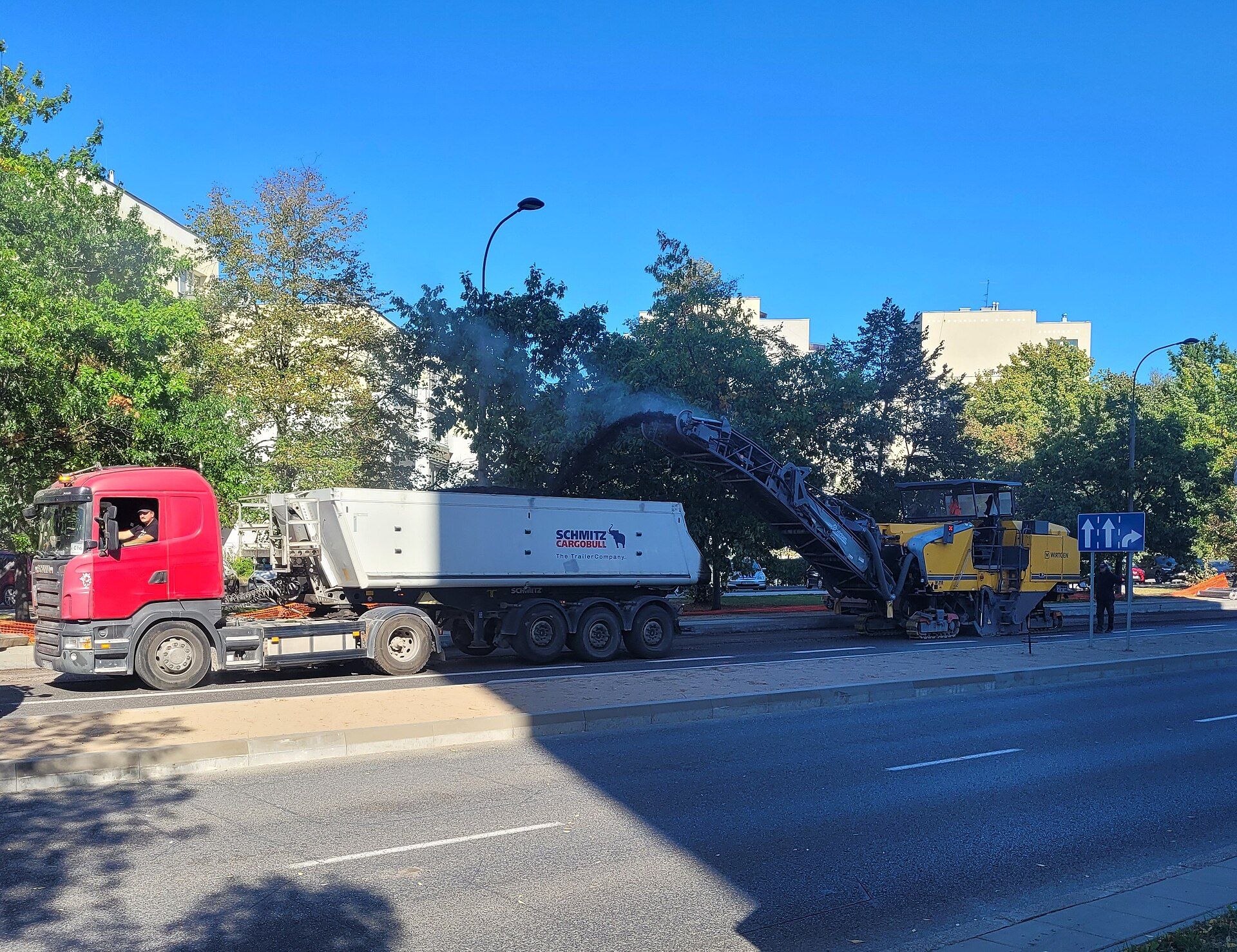
Schmitz Cargobull's steel-bodied tipper in the S.KI 24 SL 7.2 SR specification — 36,000 kg permissible, a 24,000 kg bogie, 12,000 kg on the fifth wheel, and no publishable tare.
.jpg)
Model overview
Axle variants: tri-axle · tandem
Weights. The datasheet prints two columns, "zulässig" (permissible) and "technisch" (technical), and they differ: total weight 36,000 kg permissible against 39,000 kg technical, bogie load 24,000 kg against 27,000 kg. The imposed load on the fifth wheel is 12,000 kg in both columns. The permissible column is internally consistent by this site's own addition — 24,000 kg on the bogie plus 12,000 kg on the coupling is the 36,000 kg total — and so is the technical column, 27,000 plus 12,000 making 39,000. Coupling height. Sattelhöhe, stated as a minimum recommendation up to a maximum permissible: 1,140-1,265 mm laden and 1,170-1,295 mm unladen. The height at which the semi-trailer stands level is given separately as 1,150 mm laden and 1,180 mm unladen. The field above holds the laden band. Body. Clear internal length is 7,300 mm with the chute tailgate, 7,480 mm with the surface-mounted swing flap and 7,660 mm with the combination door, the last rising to 7,675 and 7,690 mm on the deepest bodies. Four body depths are offered on the 7.2: 1,300, 1,460, 1,560 and 1,660 mm. Height from the fifth wheel to the trough floor is 285 mm. Rear overhang is 2,714 mm with the chute, 2,686 mm with the swing flap and 2,745 mm with the combination door; front overhang with the body alone is 900 mm. Turning clearance at the rear to ISO 1726 is given on two rows, "ohne E-Rad" and "mit E-Rad": 2,300 mm without a spare wheel and 2,120 mm with one, both constant across all four body depths. Maximum tipping angle 48.2 degrees. Tyres 385/65 R 22.5. Volume, and the maker's disagreement with itself. The datasheet gives volume per body depth and per tailgate for the 7.2: 21.3 / 24.0 / 25.8 / 27.5 m³ with the chute, 21.8 / 24.6 / 26.4 / 28.2 with the swing flap and 25.2 / 26.9 / 28.6 with the combination door. Above that, two current documents disagree about the S.KI SOLID as a model: 22-32 m³ on the product page and in the April 2025 bauma release, 22-35 m³ in the April 2025 applications overview. A third figure, 21-36 m³, is not a model range: the April 2019 brochure gave it for the previous generation (page 6, "Construction bodies with volumes from 21 to 36 m3"), and the bauma release gives it only for the hydraulic-tailgate build. The applications overview and the datasheet also disagree on one row: the overview gives 25.2-26.4 m³ for the 7.2 at 1,560 mm where the datasheet's own three tailgate figures run 25.8 to 26.9. No single range is preferred here. Generation. The IAA Transportation 2022 release puts the new S.KI's weight saving at up to 280 kg, broken down as 50 kg chassis, 180 kg body and 50 kg frame, against a named reference vehicle: the S.KI SOLID 7.2 with a dropside height of 1,460 mm, a 5/4 mm floor and side wall combination and an external tailgate. The frame redesign alone is credited with 45 to 110 kg depending on length and frame design, and the frame is offered in Standard, LIGHT and Heavy-Duty forms. The folding underride guard meets ECE-R58.03 and gives 728 mm of ground clearance when folded. Running gear. ROTOS running gear with MRH (Multi-Ride-Height) air suspension, named on the current product page under Chassis & running gear. The 2019 brochure adds disc brakes, EBS and RSP as standard assistance systems and a 430 mm brake disc on the 22.5" hub. Lifting axle and electric starting aid are standard on all 3-axle S.KI tipper semi-trailers, and a paver brake is offered. The galvanised frame carried a five-year warranty against rust-through in the 2022 release; the current product page and the 2025 bauma release both say ten years.
Every other model page on this site has an engine somewhere in it. This one does not, and that absence is why the page reads differently. A semi-trailer has no power, no gearbox and no gross combination weight; what it has is a tare, a permissible total, a bogie rating, an imposed load on the coupling, a deck and a body, and those are what a buyer chooses between.
The S.KI SOLID is Schmitz Cargobull’s rear-tipping semi-trailer with a rounded steel body, sold for construction-site traffic and abrasive bulk — sand, gravel, aggregate and asphalt. It sits inside a family: the SOLID carries the steel trough, the LIGHT an aluminium box body for the same work at a lower weight. The two do not weigh the same, and almost every mistake made about this vehicle in print comes from quoting one and naming the other. The current generation was announced at IAA Transportation 2022 with production scheduled to start at the end of the first quarter of 2023.
Two datasheets, one vehicle
Schmitz Cargobull publishes four system lengths for the S.KI — 7.2, 8.2, 9.6 and 10.5 — and two datasheets, both of them for the 7.2. One is the S.KI 24 SL 7.2 SR, a three-axle rear tipper with a steel round body and an internal tailgate with chute; the other is that vehicle’s thermally insulated twin, and it repeats every weight, coupling height, overhang and clear length identically. The weights, heights, dimensions and per-build volumes in the three sections that follow are that vehicle’s. The maker’s own URL pattern was probed for the other lengths and for the aluminium-bodied variants; every one of those addresses is a hard 404, and the product page’s media list offers a single sheet, “Data sheet S.KI SOLID 7.2”. Nothing below has been verified for the 8.2, the 9.6 or the 10.5.
Three weights, and the difference between them
The datasheet prints its weights in two columns, zulässig and technisch — permissible and technical — and they are not the same figure. Permissible total weight is 36,000 kg against a technical 39,000 kg. Bogie load is 24,000 kg against a technical 27,000 kg. The imposed load on the fifth wheel is 12,000 kg in both columns.
Those three weights answer three different questions, and quoting whichever is largest is what gross vehicle and gross combination weight exists to correct. The permissible total is what the trailer may weigh loaded; the bogie rating is what its three axles carry, which is less than the total because the tractor carries the rest; the imposed load is what the trailer puts on the tractor when it is full.
The permissible column adds up, and the addition is ours rather than the maker’s: 24,000 kg on the bogie plus 12,000 kg on the coupling is the 36,000 kg total, and the technical column works the same way, 27,000 plus 12,000 making 39,000. Neither sum appears in the document, and both are worth doing on any trailer sheet you are handed. There is no tare here, and its absence is deliberate — see below.
The coupling height is the other half of the deal
The other half of compatibility is geometry, and this datasheet publishes it: a fifth-wheel height stated as a minimum recommendation up to a maximum permissible, 1,140–1,265 mm laden and 1,170–1,295 mm unladen. The height at which the trailer stands level is given separately, 1,150 mm laden and 1,180 mm unladen.
Read the band as a requirement on the tractor rather than as a property of the trailer: a tractor whose fifth wheel sits outside it is the wrong tractor, no matter what the plates say. With the 12,000 kg imposed load, those are two of the four figures that decide whether a pairing works, and kingpin and fifth wheel sets out all four.
The body: length, depth, and a volume nobody agrees on
Clear internal length is 7,300 mm with the chute tailgate and 7,480 mm with the surface-mounted swing flap. The rear wall changes the deck, which is not how a curtainsider behaves and is one reason semi-trailer dimensions are quoted differently for a tipper. Body depth comes in four steps on the 7.2 — 1,300, 1,460, 1,560 and 1,660 mm — and it is depth, not length, that buys volume here.
Height from the fifth wheel to the trough floor is 285 mm, rear overhang with the chute is 2,714 mm, front overhang with the body alone is 900 mm, and the rear turning clearance radius to ISO 1726 is 2,300 mm with no spare wheel carried. Maximum tipping angle is 48.2 degrees. The tyres on the sheet are 385/65 R 22.5.
Volume is where the maker stops agreeing with itself. The datasheet gives it per body depth and per tailgate for the 7.2, running from 21.3 m³ at the shallowest body with a chute to 28.6 m³ at the deepest with a combination door. Above that, two current documents disagree about the model: the product page and the April 2025 bauma release both give 22–32 m³, while the April 2025 applications overview gives 22–35 m³. A third figure, 21–36 m³, is not a model range at all — the 2019 brochure gave it for the previous generation, and the bauma release gives it only for the build with the hydraulic tailgate. This page quotes the datasheet’s per-build figures and names the document behind each range.
What we could not confirm
The tare. This is the important one, and it is blank on purpose. Tare is the single figure a buyer cannot change after the trailer is built, and it is the one Schmitz Cargobull does not currently publish for the steel-bodied SOLID: neither datasheet carries an unladen weight row at all. The only maker tare for a bare steel-bodied SOLID is “empty weight from 5.5 t”, footnoted “depending on configuration and equipment”, on page 6 of the S.KI brochure — a document created in April 2019, which predates the generation announced for 2023 and which the maker itself says is up to 280 kg lighter. Publishing 5.5 t here would be publishing a superseded number. Page 12 of the same brochure gives “empty weight from 5.8 t” and an unladen weight from 5,790 kg, but that is the steel body with thermal insulation, and it is superseded for the same reason. The 4.8 t elsewhere in that brochure is the S.KI LIGHT and the 5.1 t in the 2025 bauma release is the insulated LIGHT; neither belongs to this trailer. On a tipper the tare decides the payload, so ask for a weighbridge ticket for the actual vehicle.
Total length and wheelbase. The datasheet states overall length as the formula E+R+N and gives no number. E is the front overhang and N the rear, and both are published; R is the wheelbase, and the sheet prints two wheelbase values and two axle spacings under column headers that do not govern them, so which pairs with which build cannot be read off the document. The sum therefore cannot be made at all, let alone presented as the maker’s figure.
Pallet capacity and body certification. Both blank for a reason rather than for want of looking. A tipper carries bulk, so no pallet figure exists in the maker’s documentation. And no EN 12642 code is published for the S.KI: that standard certifies curtainsider and box superstructures, and extending it to a tipper trough would be inventing a claim.
Internal height. Four body depths and no single figure, so the field stays empty and the range is recorded instead.
Running gear, brakes and the underride guard
The product page names the running gear as Schmitz Cargobull’s own ROTOS with MRH — Multi-Ride-Height — air suspension. The 2019 brochure adds disc brakes, EBS and RSP as standard assistance systems and a 430 mm brake disc on the 22.5” hub; what those do, and why roll stability is a trailer function rather than a tractor one, is set out in trailer braking systems. A lifting axle and an electric starting aid are standard on all three-axle S.KI tippers, and a paver brake is offered.
The folding underride guard meets ECE-R58.03 and gives 728 mm of ground clearance when folded, which is what lets the trailer back up to a paver. The IAA release puts the current generation’s weight saving at up to 280 kg — 50 kg chassis, 180 kg body and 50 kg frame — against a named reference vehicle, the SOLID 7.2 with a 1,460 mm dropside height, a 5/4 mm floor and side wall combination and an external tailgate. The frame redesign alone is credited with 45 to 110 kg depending on length and design. These are savings against the previous generation, not a payload claim in the abstract.
The bogie is a three-axle group and not a wheel formula in the sense axle configurations explained sets out: none of these axles is driven. The product page also offers the model with two axles, and none of the weights above have been verified for that build.
Who this trailer is right for
Operators moving abrasive bulk on short cycles with frequent tipping: quarry to site, plant to paver, demolition to tip. The steel trough is the reason to be here — the product page sells it on wear resistance, durability, low maintenance and value retention — and the trade it makes is the one trailer body types sets out: durability paid for in weight.
It is the wrong trailer for long-distance bulk that is not particularly abrasive, where every kilogram of tare is a kilogram of lost payload. That is what the aluminium-bodied LIGHT is for, and specifying SOLID because it sounds tougher means carrying wear resistance the work will never use.
Where it sits against its rivals
Meiller, Kögel and Wielton all build tipper semi-trailers into the same European market. This site has not verified their published data against manufacturer documents, so no scored comparison is offered — but what to compare is not the volume headline.
Compare the three weights first, and check they reconcile. Compare tare next, and insist on a figure for the configuration actually quoted rather than a “from” number with a footnote. Then compare the body: material, floor and side wall thickness, depth, and which rear wall. Volume follows from those and tells you little on its own, because two trailers of identical volume can differ by hundreds of kilograms of tare.
Buying used
Establish which body is on the chassis before anything else. SOLID and LIGHT are different trailers wearing the same family name, and the difference is easy to miss in an advert. Then establish the system length and the body depth, because those two decide the volume the vehicle actually has.
Ask which rear wall is fitted. Chute, swing flap and combination door change the clear length, the rear overhang and the volume, and they suit different unloading work — a chute is what a paver job wants. Ask for the vehicle’s own unladen weight from a weighbridge rather than a brochure, since the payload calculation rests on it and the maker publishes none for this body.
Then read the frame and the galvanising. The rust-through warranty on the galvanised frame was five years in the 2022 announcement and is ten on the current product page, so what a given trailer carries depends on when it was built and what was ordered. The standard used-vehicle checks apply to the running gear and the air system as on any air-braked vehicle; what is specific here is the trough, which is the wearing part and the one the maker sells on wear resistance and repair-friendly design.
Compared with
- Meiller
- Kögel
- Wielton
Sources
- Datenblatt S.KI SOLID — S.KI 24 SL 7.2 SR — Schmitz Cargobull AG
- S.KI SOLID — tipper semi-trailer product page — Schmitz Cargobull AG
- New Schmitz Cargobull tipper trailer for even greater payload — Schmitz Cargobull AG
- Datenblatt S.KI SOLID — S.KI 24 SL 7.2 SR mit Thermo-Isolierung — Schmitz Cargobull AG
- S.KI Tipper Semi-Trailer — product brochure, document S.KI-BRO-DE1GB-9699-1219 — Schmitz Cargobull AG
- Applications for S.KI tipper trailers — volume by type length and side wall height — Schmitz Cargobull AG
- Robust, connected and with added payload — Schmitz Cargobull at bauma 2025 — Schmitz Cargobull AG