operating
Refrigerated transport: temperature records and the ATP insulation test
Regulation (EC) No 37/2005 makes the food operator record air temperature and keep the record for at least a year. The ATP imposes almost the same duty, and adds the K test.
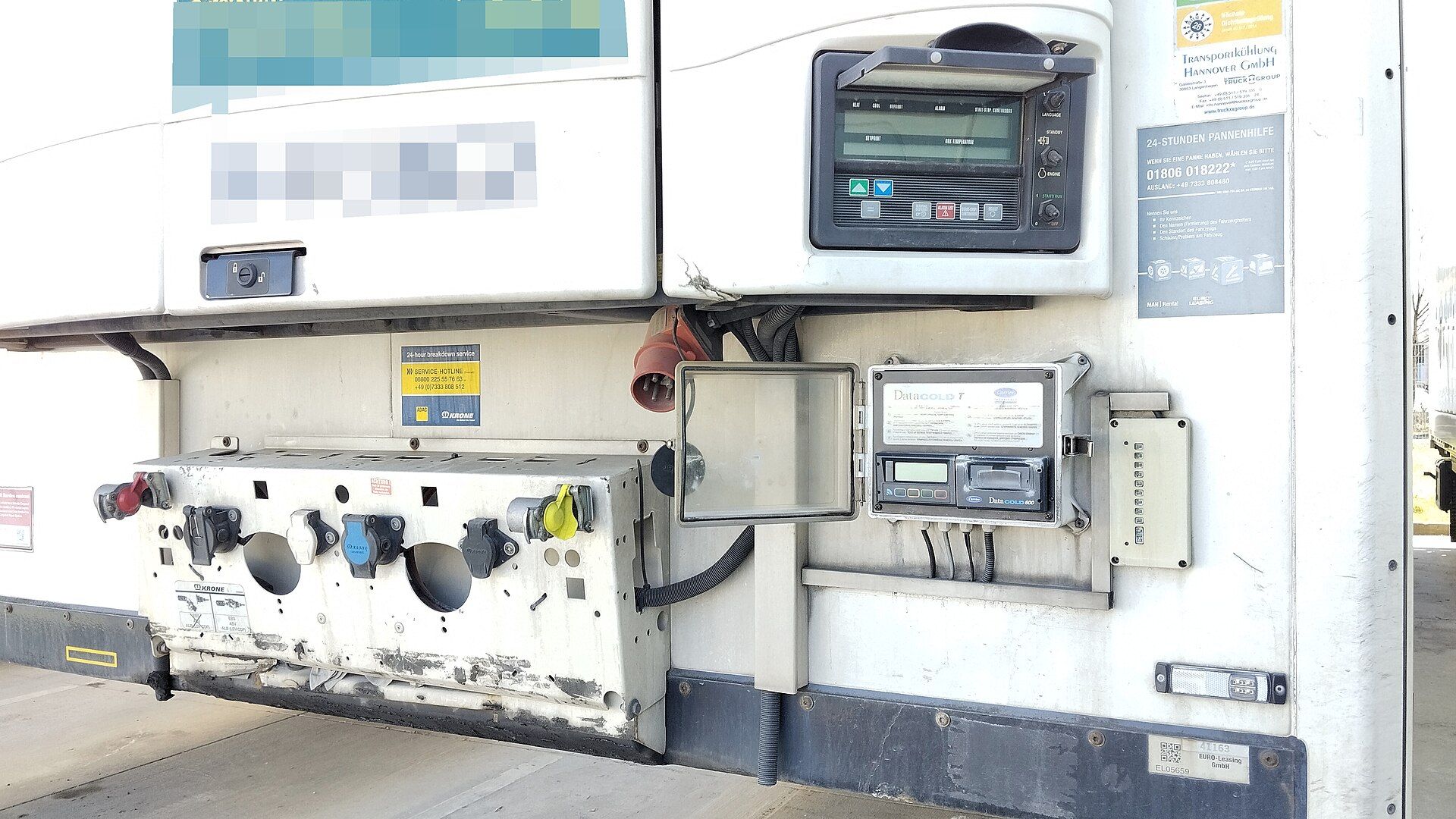
A refrigerated semi-trailer is usually sold on its cooling unit and its insulation, and both are the wrong place to start. The duty that decides whether a load of quick-frozen food was carried lawfully is a paperwork duty, it falls on the food operator rather than on the haulier’s workshop, and it is set out in three short paragraphs of a Commission regulation that most operators have never read — and, for international work, in four more paragraphs of a United Nations treaty that the trade knows for something else entirely.
The instrument that has to be on the bulkhead
Commission Regulation (EC) No 37/2005 concerns the monitoring of temperature in the means of transport, warehousing and storage used for quick-frozen foodstuffs. That is its whole subject matter, stated in Article 1, and the scope is wide: the same rule reaches the vehicle, the depot and the cold store, so a trailer that complies and a warehouse that does not are one failure, not two.
Article 2(1) is the operative sentence. The means of transport, warehousing and storage of quick-frozen foodstuffs are to be fitted with suitable recording instruments to monitor, at frequent and regular intervals, the air temperature to which the quick-frozen foodstuffs are subjected.
Three things there are routinely misread. It is a recording instrument, not a display: a gauge the driver can look at does not discharge the duty, because nothing is written down. It measures air temperature, not product temperature. And the interval is only frequent and regular — the Regulation fixes no number of minutes, so the operator must justify the interval chosen rather than point at a figure in the text.
Which instruments count, and since when
Article 2(2) names three European standards. Since 1 January 2006 all measuring instruments used for the monitoring in paragraph 1 have had to comply with EN 12830, EN 13485 and EN 13486, and food operators must keep all relevant documents permitting verification that the instruments conform to the relevant EN standard. The second obligation is the one that fails an audit: the recorder itself is rarely the problem, the certificate for it usually is.
The Regulation names the three standards without an edition year, and they have not stood still. The edition of EN 13486 that existed when the Regulation was drafted was approved in 2001; the Swedish national adoption of it is now recorded as withdrawn and replaced by a 2023 edition.
There was a transitional period, and it has expired. Instruments installed up to 31 December 2005 under the legislation in force before the Regulation was adopted could continue in use until 31 December 2009 at the latest.
How long the record is kept
Article 2(3): the temperature recording is to be dated and stored by the food operator for a period of at least one year, or for a longer period taking into account the nature and the shelf life of the quick-frozen foodstuffs.
One year is a floor, not a retention period. The second limb is an obligation with no number attached, and for a product with a long shelf life it is the one that governs. Note also the term the Regulation uses: the duty is placed on the food operator, a phrase Regulation 37/2005 nowhere defines. It does not say who the food operator is when the trailer belongs to a subcontractor, and it does not put the carrier outside the picture either — Regulation (EC) No 852/2004 applies to all stages of production, processing and distribution of food, and the transport chapter of its Annex II applies to all transportation. So the transport agreement has to settle who dates and keeps the file before the first load moves, and the answer belongs with the other documents a buyer assembles when buying a used truck for temperature-controlled work.
Where the duty stops
Article 3 sets out two derogations, and both are narrower than they are usually taken to be.
Under Article 3(1), the air temperature during storage in retail display cabinets and in the course of local distribution is to be measured by at least one easily visible thermometer instead. For open retail cabinets the maximum load line has to be clearly marked and the thermometer has to indicate the temperature at the air return side at the level of that mark. Under Article 3(2), the competent authority may grant a derogation for cold store facilities of less than 10 m³ used for storing stock in retail outlets, again in favour of an easily visible thermometer.
What it replaced
Regulation 37/2005 repealed Commission Directive 92/1/EEC outright, in Article 4. Anyone still working from the old Directive is working from a text that was repealed in 2005, and one of its features is gone: the recitals record that the derogation 92/1/EEC allowed for the carriage of quick-frozen foodstuffs by rail was no longer justified and should be terminated after a transitional period. Article 5 accordingly applied the Regulation to transport by rail from 1 January 2006.
The parent instrument is still standing. Regulation 37/2005 was made under Article 11 of Council Directive 89/108/EEC on the approximation of the laws of the Member States relating to quick-frozen foodstuffs for human consumption, which remains in force in its consolidated version of 1 July 2013 and which empowers the Commission to determine the procedures for monitoring temperatures in the means of transport, warehousing and storage.
The Directive is also where the scope word comes from, and it is worth reading before assuming a load is covered. Article 1(1) applies the Directive to quick-frozen foods intended for human consumption. Article 1(2) defines those as foodstuffs which have undergone a suitable freezing process known as quick-freezing, whereby the zone of maximum crystallization is crossed as rapidly as possible and the resulting temperature of the product, after thermal stabilization, is continuously maintained at -18 °C or lower at all points, and which are marketed in such a way as to indicate that they possess this characteristic. Article 5(1) then sets what the product has to hold: the temperature must be stable and maintained, at all points in the product, at -18 °C or lower, with possibly brief upward fluctuations of no more than 3 °C during transport. And — a detail that catches people out — the same Article 1(2) provides that ice cream and other edible ices are not regarded as quick-frozen foodstuffs for the purposes of the Directive. Regulation 37/2005 defines nothing for itself; it borrows.
What the ATP is, and how far it reaches
The ATP, the Agreement on the International Carriage of Perishable Foodstuffs and on the Special Equipment to be Used for such Carriage, was drawn up at Geneva on 1 September 1970. It is a United Nations treaty rather than EU law, and it runs on two chains that are constantly mistaken for one another.
The first is the equipment chain. Article 1 provides that, for the international carriage of perishable foodstuffs, equipment is not to be designated as insulated, refrigerated, mechanically refrigerated, heated, or mechanically refrigerated and heated unless it complies with the definitions and standards set forth in Annex 1. Article 2 then obliges the Contracting Parties to take the measures necessary to ensure that the Article 1 equipment is inspected and tested for compliance with those standards in conformity with Annex 1, appendices 1, 2, 3 and 4. The insulation categories, the checks and the certificate all hang off that chain, and its only limitation is the one in Article 1’s opening words.
The second is the carriage chain, and its conditions are the ones usually quoted — often as though they governed the certificate, which they do not. Article 3(1) applies the provisions of Article 4 to all carriage, whether for hire or reward or for own account, carried out exclusively — subject to the provisions of paragraph 2 of the same article — by rail, by road or by a combination of the two, of quick (deep)-frozen and frozen foodstuffs, and of the foodstuffs listed in Annex 3 even where those are neither, if the point at which the goods, or the equipment containing them, are loaded and the point at which they are unloaded are in two different States and the point at which the goods are unloaded is situated in the territory of a Contracting Party. Paragraph 2 extends the same treatment to sea crossings of less than 150 km on two conditions that have to hold together: the goods must be shipped in equipment used for the land journey or journeys without transloading of the goods, and the crossing must precede or follow one or more land journeys of the kind described in paragraph 1, or take place between two such land journeys. Article 4(1) is what those conditions switch on — for the carriage of the perishable foodstuffs specified in Annexes 2 and 3, the Article 1 equipment is to be used unless the temperatures to be anticipated throughout carriage render that requirement manifestly unnecessary.
So a journey that loads and unloads inside one country fails the Article 3(1) test, and the Annex 2 and Annex 3 duties do not reach it. Nothing follows from that about certificates or check intervals, because those come from Articles 1 and 2 and are not conditioned on Article 3(1) at all.
The treaty’s own recording duty
Annex 2, Appendix 1 to the Agreement, at page 231 of the Polish official gazette that carries the authentic English text, is headed Monitoring of air temperature for transport of quick-frozen perishable foodstuffs, and it is four paragraphs long. The transport equipment is to be fitted with an instrument capable of measuring and recording air temperatures and storing the data obtained, to monitor the air temperatures to which quick-frozen foodstuffs intended for human consumption are subjected. The instrument is to be verified in accordance with EN 13486 by an accredited body, and the documentation is to be available for the approval of ATP competent authorities. The instrument is to comply with EN 12830. And the temperature recordings obtained in this manner must be dated and stored by the operator for at least one year or longer, according to the nature of the food.
Set that beside Article 2 of Regulation 37/2005 and the two texts impose nearly the same duty in nearly the same words: a recording instrument for air temperature, EN 12830 for the instrument, EN 13486 for its verification, documentation that has to be produced on demand, and a one-year floor with the same open-ended extension for the nature of the food. Two of the three standards the Regulation names in Article 2(2) are the two the Appendix names. COCH, the Polish ATP testing station, reproduces the same four paragraphs on its testing page under the Annex 2, Appendix 1 reference, alongside the K figures.
What the ATP test actually measures
Paragraph 1 of Annex 1 defines insulated equipment by its overall heat transfer coefficient, the K coefficient, and splits it into two categories.
| Category | K coefficient | Further condition |
|---|---|---|
| IN — normally insulated | equal to or less than 0.70 W/(m²K) | none stated |
| IR — heavily insulated | equal to or less than 0.40 W/(m²K) | side-walls at least 45 mm thick, for transport equipment more than 2.50 m wide |
The second limb of the heavily insulated definition is the part that goes missing when the figures are quoted second-hand: the K value alone does not put a body in that category. The COCH testing station in Kraków, accredited to carry out ATP inspections and issue certificates, publishes both K figures in the same form and adds the two consequences an operator actually meets. If a test shows a coefficient above 0.70 W/(m²K), the body does not comply with the Agreement and will not obtain an ATP certificate at all. And a body in the normally insulated class cannot be issued with a certificate in a class that allows frozen food to be carried — which is why, on a used reefer bought for frozen work, the insulation figure is the first line to read and not the refrigeration unit’s badge.
That is what an insulation class tells a buyer, and it is all it tells him. The K figure is a property of the empty box, and it says nothing about what was loaded into it or whether the instrument in the previous section was ever switched on. It is also not usually the figure a maker’s own sheet carries: Schmitz Cargobull publishes two of its own k-values for the S.KO COOL SMART, together with a class rather than a tested K, which is the distinction to hold on to when a sales sheet and a certificate are read side by side.
The six-year clock
Annex 1, Appendix 1, paragraph 1 requires compliance with the standards prescribed in the Annex to be checked before equipment enters into service, periodically and at least once every six years, and whenever the competent authority requires it. That figure is the treaty’s own rather than a testing station’s convention, and so is what a passed check buys.
The outcome of a check on a body already in service is set out in Annex 1, Appendix 2, section 5, on checking the insulating capacity of equipment in service, at page 163 of the same gazette. Paragraph 5.3(a) has two branches rather than one. If the conclusions of the appointed experts on the general condition of the body are favourable, the equipment may be kept in service as insulated equipment of its initial class for a further period of not more than three years. If those conclusions are not acceptable, the equipment may be kept in service only following a satisfactory measurement of the K coefficient by the procedure described in paragraphs 2.1.1 to 2.3.2 of that appendix — and it may then be kept in service for a further period of six years. Paragraph 5.3(c) allows the same six years to serially produced equipment of one type belonging to one owner, where each unit is inspected and the K coefficient of not less than 1% of the units involved is measured. Three years is the expert-examination branch, not the ceiling.
COCH states the periods as maximums. For a new means of transport the validity of a certificate is a maximum of six years; for equipment in service it is a maximum of three years from the date of the test; and the station says in terms that these are maximum periods which may be shortened depending on the condition of the equipment. On a used reefer the expiry date is the cheapest thing in the file to check and the most expensive one to discover at a border.
Where the two duties meet
The distinction worth taking away is not that one system owns the box and the other owns the record. Both of them require the record. On the substance they say close to the same thing, down to the two standards they share, and an operator who has satisfied one has very nearly satisfied the other.
What separates them is reach and enforcement. Regulation 37/2005 reaches the means of transport, warehousing and storage of quick-frozen foodstuffs whether or not a border is crossed, it names three standards rather than two, and it puts the duty on the food operator, who answers to the food authorities of the Member State. The ATP duty sits in Annex 2, so it is reached through Article 4 and bites only on carriage that meets the Article 3(1) test; it puts the retention duty on the operator and points the verification documents at the ATP competent authorities — the same authorities behind the certificate for the body. A valid ATP certificate is not evidence that the record was kept, and a clean year of recordings is not evidence that the body still holds its class. Neither substitutes for the other, but that is because they prove different things, not because either of them is silent about the record.
The general hygiene rules sit underneath both. Annex II to Regulation (EC) No 852/2004 states in terms that its Chapter IV applies to all transportation, and point 7 of that Chapter requires that, where necessary, conveyances and/or containers used for transporting foodstuffs are capable of maintaining foodstuffs at appropriate temperatures and allow those temperatures to be monitored.
The practical shape of all this is unglamorous. The specification decision — which body, which insulation category — is made once, when the trailer is chosen, and it is made inside the same weight limits as every other body. The recurring cost is the recorder, its conformity documents and the year or more of stored data, and it belongs in the same column of the budget as the tachograph and the roadworthiness file rather than in the fuel line of a running cost calculation. Any body that is to carry the ATP designation is checked before it enters service and at least once every six years after that, and what a passed check buys is three years on a favourable expert examination or six on a satisfactory K measurement. The record is made on every journey, wherever the journey starts and ends.
Quick answers
- How long must temperature records be kept in quick-frozen food transport?
- At least one year. Article 2(3) of Regulation (EC) No 37/2005 requires the temperature recording to be dated and stored by the food operator for a period of at least one year, or for a longer period taking into account the nature and the shelf life of the quick-frozen foodstuffs. Annex 2, Appendix 1 to the ATP sets the same floor, requiring recordings to be dated and stored by the operator for at least one year or longer, according to the nature of the food.
- Which standards must a temperature recorder used for quick-frozen food transport comply with?
- EN 12830, EN 13485 and EN 13486. Article 2(2) of Regulation (EC) No 37/2005 has required all measuring instruments used for the monitoring provided for in Article 2(1) — the air temperature to which quick-frozen foodstuffs are subjected — to comply with those three standards since 1 January 2006, and requires food operators to keep all relevant documents permitting verification that the instruments conform.
- Does the ATP Agreement itself require a temperature recorder?
- Yes. Annex 2, Appendix 1 to the ATP requires transport equipment to be fitted with an instrument capable of measuring and recording air temperatures and storing the data obtained, to monitor the air temperatures to which quick-frozen foodstuffs intended for human consumption are subjected. The instrument must comply with EN 12830 and be verified in accordance with EN 13486 by an accredited body, with the documentation available for the approval of ATP competent authorities.
- What are the two insulation categories of the ATP Agreement?
- Normally insulated and heavily insulated. Paragraph 1 of Annex 1 to the ATP specifies normally insulated equipment by a K coefficient equal to or less than 0.70 W/(m²K), and heavily insulated equipment by a K coefficient equal to or less than 0.40 W/(m²K) and by side-walls with a thickness of at least 45 mm for transport equipment of a width greater than 2.50 m. Both limbs of that second definition have to be met.
- How often does an ATP-certified body have to be re-checked?
- At least once every six years. Annex 1, Appendix 1, paragraph 1 of the ATP requires compliance to be checked before the equipment is put into service, periodically at least once every six years, and whenever the competent authority requires it.
- Does the recording duty apply to a shop's chest freezer?
- Not in the same form. Article 3(1) of Regulation (EC) No 37/2005 substitutes at least one easily visible thermometer for retail display cabinets and for local distribution, and Article 3(2) lets the competent authority allow the same for cold store facilities of less than 10 m³ used to hold stock in retail outlets.
Sources
- Commission Regulation (EC) No 37/2005 on the monitoring of temperatures in the means of transport, warehousing and storage of quick-frozen foodstuffs intended for human consumption — EUR-Lex, Publications Office of the European Union
- Council Directive 89/108/EEC on the approximation of the laws of the Member States relating to quick-frozen foodstuffs for human consumption — consolidated text of 1 July 2013 — EUR-Lex, Publications Office of the European Union
- Regulation (EC) No 852/2004 on the hygiene of foodstuffs — consolidated text of 24 March 2021 — EUR-Lex, Publications Office of the European Union
- Agreement on the International Carriage of Perishable Foodstuffs and on the Special Equipment to be Used for such Carriage (ATP), Geneva, 1 September 1970 — Dz.U. 2022 poz. 1824 — Dziennik Ustaw Rzeczypospolitej Polskiej / Kancelaria Sejmu
- ATP / FRC testing and certification — Polish ATP Testing Station — Centralny Ośrodek Chłodnictwa COCH, Kraków
- ATP Agreement — general information, certificate validity and periodic inspection — Centralny Ośrodek Chłodnictwa COCH, Kraków
- SS-EN 13486 — Temperature recorders and thermometers for the transport, storage and distribution of chilled, frozen, deep-frozen/quick-frozen food and ice cream: periodic verification — Svenska institutet för standarder (SIS)