operating
Bus driving licences: categories D1 and D, and the ages that gate them
What categories D1, D1E, D and DE cover, the minimum ages that apply to each today, and what Directive (EU) 2025/2205 changes with effect from 26 November 2029.
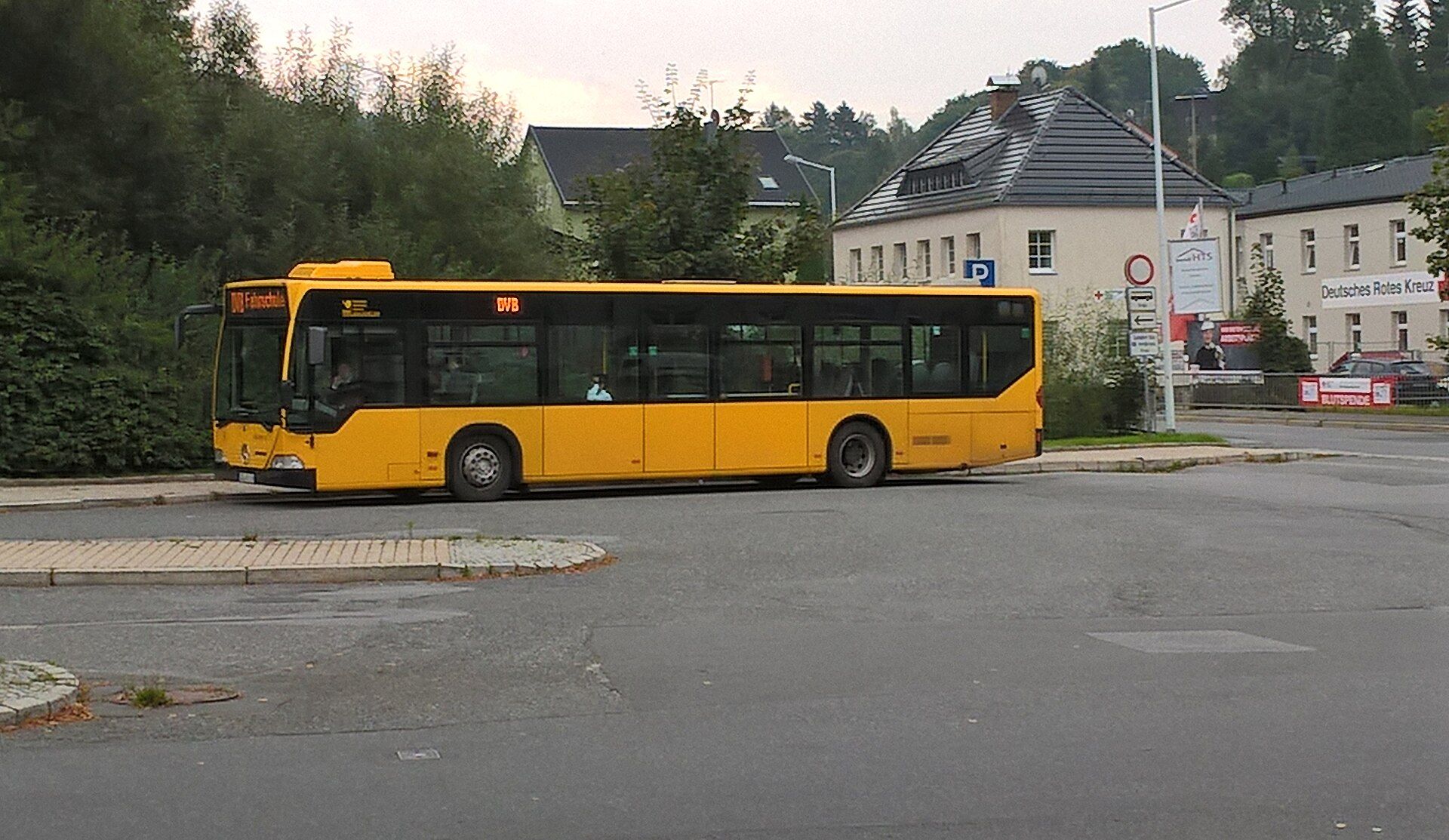
Two documents decide whether a person may take a bus out of the depot, and they are issued under different instruments by different processes. The driving licence category says which vehicle the holder may drive. The certificate of professional competence says the holder is qualified to be paid for carrying passengers in it. The ages at which the pair can be held are not one number, and both instruments that set them are changing.
The four passenger categories
Directive (EU) 2025/2205, the new driving licence directive, lists the categories in Article 6(1)(c). Points (viii) to (xi) are the passenger ones.
| Category | What it covers | Minimum age under Article 7(1) |
|---|---|---|
| D1 | More than 8 but no more than 16 passengers in addition to the driver, maximum length not exceeding 8 metres | 21 |
| D1E | A D1 tractor vehicle with a trailer of maximum authorised mass exceeding 750 kg | 21 |
| D | More than eight passengers in addition to the driver | 24, or 21 with a CPC |
| DE | A D tractor vehicle with a trailer of maximum authorised mass exceeding 750 kg | 24, or 21 with a CPC |
Vehicles in D1 and D may be combined with a trailer of category O1, which Article 4(1)(c)(i) of Regulation (EU) 2018/858 defines as a trailer of maximum mass not exceeding 0.75 tonnes. Anything heavier moves the combination into D1E or DE.
None of the four stands alone. Article 9(1) issues BE, C1, C1E, C, CE, D1, D1E, D and DE only to drivers already entitled to drive category B vehicles, so a bus category is always an addition to a car licence. The equivalences in Article 9(2) then run downwards: a DE licence is also valid for D and D1 under point (d), and for D1E combinations under point (e).
The 8-metre ceiling on D1 is a licence limit, not a construction limit. It does not track the type-approval classes that decide what a vehicle may do with its passengers, which are set by UN Regulation No. 107 and explained in bus classes. The two schemes cut the field at different points. Classes I, II and III exist only above 22 passengers in addition to the driver (paragraph 2.1.1), which is already past the 16-passenger ceiling of D1, so a vehicle in any of those three is always a category D vehicle whatever its length. It is Classes A and B, at 22 passengers or fewer (paragraph 2.1.2), that straddle the line. On those two definitions a Class B vehicle is a D1 vehicle carrying 16 passengers in a body under 8 metres, and a category D vehicle carrying 20, or carrying the same 16 in a body 8.5 metres long.
The second document
The licence is the vehicle side. The qualification side is Directive (EU) 2022/2561, which covers drivers of vehicles requiring a D1, D1+E, D or D+E licence and grants a certificate of professional competence at two grades. Article 6(1) is the standard initial qualification, and it reaches the driver in whichever of two forms the Member State has picked, because Article 3(1)(a) makes them alternatives the State chooses between rather than options the driver has. The first, course attendance plus a test, is point (a) of Article 6(1) and runs through Annex I, Section 2.1: 280 hours, including at least 20 hours of individual driving, of which at most eight may be on special terrain or a top-of-the-range simulator. The second, tests only, is point (b) and runs through Section 2.2, which sets no course hours at all — a theoretical test of at least four hours, and a practical test of at least 90 minutes on the road plus at least 30 minutes on loading, passenger comfort and safety, crime prevention, physical risk and emergency situations, which are points 1.5, 1.6, 1.7, 3.2, 3.3 and 3.5 of Section 1. Article 6(2) is the accelerated qualification, itself optional for the Member State under Article 3(2): 140 hours under Section 3, at least 10 of them individual driving, of which at most four may be on special terrain or a top-of-the-range simulator. All of them then require 35 hours of periodic training every five years. Those hours, and the exemptions that lift the requirement altogether, are set out in the operating obligations of a bus fleet.
The certificate is recorded on the licence itself. Union code 95 in Annex I, Part E of Directive (EU) 2025/2205 reads “Driver holding CPC, meeting the obligation of professional aptitude provided for by Directive (EU) 2022/2561 until …”, the Annex’s own worked example being 95(01.01.2028). A licence with a valid D category and an expired code 95 still permits driving the vehicle and no longer permits doing the job.
What binds today
Directive 2006/126/EC is still in force; EUR-Lex shows it as “In force: This act has been changed. Current consolidated version: 01/11/2020”. Its Article 4(4) fixes the minimum age for categories D1 and D1E at 21 years in point (i), and for categories D and DE at 24 years in point (k). Article 4(7) then removes the question from that directive for anyone with a professional qualification: for holders of a CPC, the minimum age is the one prescribed by the CPC directive.
There the answer has two layers, because the provision has already been rewritten once. Article 27, point (b), of Directive (EU) 2025/2205 replaced Article 5(3) of Directive (EU) 2022/2561 outright — “paragraph 3 is replaced by the following” — and the EUR-Lex record for the CPC directive dates that replacement from 25 November 2025. But Article 29(1) of the new Directive gives Member States until 26 November 2028 to adopt the measures necessary to comply with it and requires them to apply those measures only from 26 November 2029, and Article 27 carries no earlier date of its own. Until then it is national law transposing the pre-amendment wording that binds a driver, and EUR-Lex has published no consolidated version of Directive (EU) 2022/2561, so the text it serves for that directive is still the pre-amendment one. In that version three thresholds apply rather than one. From 21, with the accelerated CPC of Article 6(2), a driver may take D1 and D1+E vehicles, and D and D+E vehicles only “to carry passengers on regular services where the route does not exceed 50 kilometres”. From 21, with the standard CPC of Article 6(1), the same driver may take D and D+E vehicles without that distance condition. And from 23, the accelerated CPC opens D and D+E generally. Two national options sit underneath: a Member State may authorise the first group from 18 on its own territory with an Article 6(1) CPC, and the second from 20, reduced to 18 where the vehicle is driven without passengers.
The practical shape of that is a 21-year-old on the short route confined to minibuses and to scheduled work inside 50 kilometres for two more years.
What changes, and when
Directive (EU) 2025/2205 was published at OJ L, 2025/2205 of 5 November 2025 and EUR-Lex records it as “In force”. Article 31 sets entry into force on the twentieth day following publication, which puts it at 25 November 2025 — our arithmetic. Article 30(1) repeals Directive 2006/126/EC with effect from 26 November 2029, except for its Article 6(4), point (c), repealed with effect from 26 November 2027; Article 30(2) repeals Regulation (EU) No 383/2012 from the same 2029 date. Until then the old directive governs.
Article 29 sets the timetable. Member States adopt and publish the measures necessary to comply by 26 November 2028 and apply them from 26 November 2029, with two exceptions: the alternatively fuelled vehicle equivalences in Article 9(2), points (j) and (k), are adopted and applied from 26 November 2027, and the accompanied driving scheme in Article 17 from 26 November 2028. Article 27, which rewrites the CPC directive, is given no separate date, so the measures transposing it fall under the general one.
Both halves of the age question move together. On the licence side, Article 7(1)(f) keeps 24 years for D and DE, and point (g) sets 21 years for D and DE “provided that the driver holds a CPC as referred to in Article 6(1) or 6(2) of Directive (EU) 2022/2561” — either grade, not only the standard one. On the qualification side, the Article 5(3) that Article 27 has already substituted into Directive (EU) 2022/2561 carries a single age: from 21, with a CPC under Article 6(1) or (2), a driver may take D, D+E, D1 and D1+E vehicles. The 23-year threshold disappears outright, and the 50-kilometre condition disappears from that general rule. In place of the threshold, Member States may set up a monitoring scheme for drivers under 23 holding an accelerated CPC, and where such drivers are required to attend road-safety periodic training before turning 23, that attendance counts towards the 35 hours. Recital 50 states the intent plainly: the conditions for driving a bus of category D or DE from a certain age following professional qualification “should be simplified, without compromising road safety”.
The 50 kilometres survive one level down, in the national derogations. The second subparagraph of the replacement Article 5(3) lets a Member State authorise D1 and D1+E on its own territory from 18 with an Article 6(1) CPC; the third lets it authorise D and D+E from 20 on the same CPC, and reduce that to 18 either to drive without passengers or to carry passengers on regular services where the route does not exceed 50 kilometres. At that level the distance limit is not merely kept but widened, because the version still applied today reduces to 18 only where the vehicle is driven without passengers; the 50-kilometre regular service is new. Those are the restrictions the licence directive incorporates: Article 7(2), point (e), lets a Member State go down to 18 for D1, D1E, D and DE where the driver holds an Article 6(1) CPC, and point (e)(ii) makes D and DE subject to that same third subparagraph — the no-passengers or 50-kilometre pair. Point (f) allows 20 for D and DE with an Article 6(1) CPC.
A licence issued young stops at the border
Article 7(4) is the provision an operator planning cross-border work has to read. Licences issued under the derogations in paragraphs 2 and 3 are valid only on the territory of the issuing Member State until the holder reaches the minimum age set out in paragraph 1, after which they are valid throughout the Union. Other Member States may recognise licences issued below the paragraph 1 ages — but the second subparagraph states that they “shall not recognise the validity of driving licences issued under paragraph 2, points (b), (e) and (f)”. Points (e) and (f) are the bus derogations. A driver licensed at 18 or 20 under a national option is therefore a domestic driver by law until the general age is reached, which is a rostering constraint worth pricing before buying a used coach for cross-border tourism.
What does not change
Administrative validity stays at five years, and stays a default rather than a fixed term. Article 7(2)(b) of Directive 2006/126/EC gives categories C, CE, C1, C1E, D, DE, D1 and D1E five years where the car categories get ten; Article 10(2)(b) of the new Directive repeats the five, while raising the car categories to 15. Both then let a Member State go shorter, but only the old directive names category D when it does. Article 7(3) of Directive 2006/126/EC allows a licence issued to a novice driver in any category to be limited, allows the first licence issued to a novice driver in categories C and D to be limited to three years, allows any individual licence to be limited where more frequent medical checks are needed, and allows a reduction for holders who have reached 50. Article 10(2) of Directive (EU) 2025/2205 keeps the architecture but drops the category-specific limb and the three-year figure with it, and moves the age: a limit for novice drivers in any category, naming no period; a limit where increased medical checks or self-assessments are needed; and a reduction from 65. No shortening power in the new Article 10(2) names a category at all — the only category lists in it are the validity periods themselves.
The medical regime also stays where it is. Annex III of both directives sorts drivers into two groups, and Group 2 is the same list of eight categories. Article 11(1) of Directive (EU) 2025/2205 requires a medical examination before first issue for those categories “regardless of whether a medical examination was undertaken for another category”, and Article 11(2) requires one before renewal. The self-assessment form and national fitness-assessment system that Article 11(3) offers as alternatives are available only for categories AM, A, A1, A2, B, B1 and BE. A bus driver’s five-yearly renewal remains a medical event.
What is not extended to buses
Article 17 introduces accompanied driving from 17 years, marked with Union code 98.02, and Member States must issue such licences for category B. Paragraph 2 allows them to extend the scheme to categories C1, C1E and C, with mutual recognition among the Member States that do. The passenger categories are not in that list, and recital 48 frames the scheme as “making the profession of truck driver more accessible”. It does not open a route into a bus at 17.
Two narrow routes into a passenger vehicle without a D licence do exist, and neither of them travels. Both are optional for the Member State, and both authorise driving only on that Member State’s own territory. Article 9(4) lets Member States “authorise the driving on their territory” of, at point (a), D1 vehicles of maximum authorised mass 3,500 kg, excluding specialised equipment for the carriage of passengers with disabilities, by drivers over 21 who have held a category B licence for at least two years, where the vehicles are used by non-commercial entities for social purposes and the driver volunteers. Where that entitlement is shown on the licence at all, the second subparagraph requires it to be shown “only by means of relevant national codes” — not the Union codes of Annex I, Part E that other Member States read. Article 9(5) entitles Member States to authorise the driving of D or D1 vehicles “on their territories” by the holder of a category C licence; it turns on who is driving and not on the licence alone, and it does not open D and D1 vehicles to category C holders at large. The holder must be the person executing a roadworthiness test under Directive 2014/45/EU, and then only within a 5 km radius of the testing centre, or a mechanic of the repair workshop performing a test drive once the vehicle has been repaired or for maintenance or inspection purposes, within a 5 km radius of the workshop. No other person may be transported, and on leaving the centre or workshop the driver must be able to prove on inspection which of the two purposes the trip serves.
Where the threshold meets the supply
IRU reported in October 2023 that Europe had 105,000 unfilled bus and coach driver positions, 10 per cent of the total professional driver population and 54 per cent more than in 2022, with a forecast of more than 275,000 by 2028. Its current driver shortage page puts the demographic more sharply: fewer than 3 per cent of Europe’s bus and coach drivers are under 25 and more than 40 per cent are over 55. The 2023 release named the barrier in terms the 2025 Directive answers only in half. It called for the minimum age to be lowered in individual countries “without accompanying distance restrictions such as the 50km limit”. The Union age of 21 does arrive without one. The route to 18 in individual countries — the one the release was asking about — does not, because that is precisely where the replacement Article 5(3) puts the 50 kilometres.
Whether 26 November 2029 closes the gap is not a question the text can answer. What it does say is that from that date the accelerated qualification of Article 6(2) and the standard qualification of Article 6(1) reach category D at the same age, removing the two-year penalty the shorter one now carries — a comparison of the two versions of Article 5(3), not a statement either of them makes.
Quick answers
- What licence do you need to drive a bus in Europe?
- Category D, which Article 6(1)(c)(x) of Directive (EU) 2025/2205 defines as motor vehicles designed and constructed for the carriage of more than eight passengers in addition to the driver. Smaller vehicles fall in category D1. Both are issued only to drivers already entitled to drive category B vehicles, and carrying passengers for hire or reward additionally requires a certificate of professional competence under Directive (EU) 2022/2561.
- What is the minimum age to drive a bus in the EU?
- 24 for categories D and DE under Article 4(4)(k) of Directive 2006/126/EC, the directive in force, and 21 for D1 and D1E under point (i) of the same paragraph. Article 4(7) then hands the question to the CPC directive for drivers who hold a certificate of professional competence, and the version of Article 5(3) of Directive (EU) 2022/2561 that Member States apply until 26 November 2029 sets 21 or 23 there depending on which qualification route the driver took. Article 27 of Directive (EU) 2025/2205 has already replaced that paragraph, but Member States need not apply the replacement before that date.
- Is the EU lowering the bus driver age to 21?
- Article 7(1)(g) of Directive (EU) 2025/2205 sets 21 years for categories D and DE where the driver holds a CPC as referred to in Article 6(1) or 6(2) of Directive (EU) 2022/2561. Without a CPC, point (f) of the same paragraph keeps 24. Article 29 requires Member States to adopt and publish the implementing measures by 26 November 2028 and to apply them from 26 November 2029.
- What is the difference between category D1 and category D?
- Size. Under Article 6(1)(c)(viii) of Directive (EU) 2025/2205, D1 covers vehicles for more than 8 but no more than 16 passengers in addition to the driver, with a maximum length not exceeding 8 metres; the category D definition in point (x) sets no upper limit of either kind. The minimum age also differs, though not for a professional driver: Article 7(1)(d) sets 21 for D1 and D1E against 24 for D and DE in point (f), but point (g) of the same paragraph sets 21 for D and DE as well where the driver holds a CPC as referred to in Article 6(1) or 6(2) of Directive (EU) 2022/2561.
- How long is a category D driving licence valid?
- Five years is the Union default rather than a fixed period. Article 7(2)(b) of Directive 2006/126/EC gives categories C, CE, C1, C1E, D, DE, D1 and D1E an administrative validity of five years, and Article 10(2)(b) of Directive (EU) 2025/2205 keeps the same period — but both let a Member State go shorter, the older directive allowing a novice driver's first category C or D licence to be limited to three years, the new one keeping equivalent powers for novice drivers, for licences needing more frequent medical checks, and from the age of 65. Renewal is conditional on continuing compliance with the Annex III minimum standards of fitness.
Sources
- Directive (EU) 2025/2205 of the European Parliament and of the Council of 22 October 2025 on driving licences — Articles 6, 7, 9, 10, 11, 17, 27, 29, 30 and 31, Annex I Part E, Annex III — Official Journal of the European Union
- Directive 2006/126/EC on driving licences (Recast), consolidated text of 1 November 2020 — Article 4 and Article 7, Annex III — Official Journal of the European Union
- Directive (EU) 2022/2561 on the initial qualification and periodic training of drivers of certain road vehicles for the carriage of goods or passengers (codification) — Articles 5 and 6, Annex I — Official Journal of the European Union
- Regulation (EU) 2018/858 on the approval and market surveillance of motor vehicles — Article 4, vehicle categories — Official Journal of the European Union
- UN Regulation No 107 — Uniform provisions concerning the approval of category M2 or M3 vehicles with regard to their general construction (OJ L 52, 23.2.2018) — paragraphs 2.1.1 and 2.1.2, vehicle classes — Official Journal of the European Union / UNECE
- Europe's bus and coach driver shortage widens 54%, grim outlook to 2028 — IRU — World Road Transport Organisation
- Driver shortage — IRU — World Road Transport Organisation