operating
The Regulatory Floor Under Bus Fleet Operating Costs
EU bus and coach operator duties traced to their instruments: who is bound, from when, what is required, and where each obligation stops.
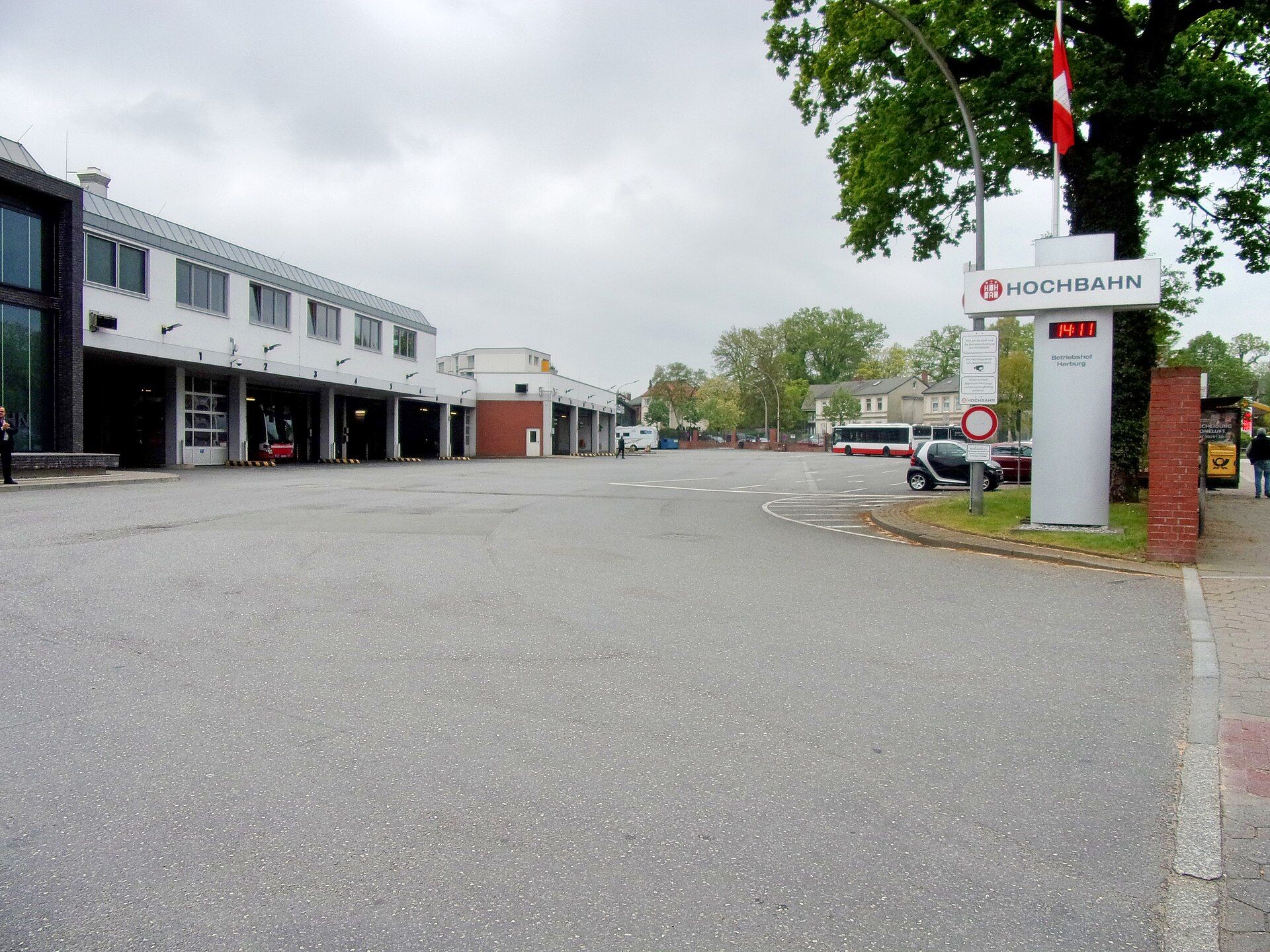
This article sets out the EU regulatory obligations sitting underneath a bus or coach operator’s cost base — which instrument, on whom, from when, requiring what — and puts no figure on any of them.
We could not open a primary source that puts a figure on European bus fleet operating costs, and this site does not publish what it cannot trace. The legal floor is traceable: each section is anchored to the instrument that governs it, read in the consolidated text where one exists, together with the amending acts that changed it, and several of these duties leave part of a bus operation outside them.
Driver qualification: Directive (EU) 2022/2561
Directive (EU) 2022/2561 is in force. It codified Directive 2003/59/EC, which EUR-Lex shows as “No longer in force, Date of end of validity: 11/01/2023; Repealed by 32022L2561” — the older directive belongs in the past tense. The codifying text was published on 23 December 2022 and entered into force under Article 15 on the twentieth day following publication.
Article 1 covers drivers of vehicles requiring a category D1, D1+E, D or D+E licence; Article 2 lifts the requirement for a closed list of exempt uses. Which of those categories a driver may hold, and from what age, is a separate question answered by the driving licence directive and set out in bus driving licences.
Three routes lead to the certificate of professional competence, and the hours sit in Annex I, not Article 6. Article 6(1)(a) is a course at an approved centre plus a test — 280 hours under Annex I, Section 2.1, at least 20 individual driving. Article 6(1)(b) is tests-only: Section 2.2 prescribes no course attendance, hence no course hours. Article 6(2) is accelerated, and Section 3 sets 140 hours with at least 10 individual driving. Which applies depends on the Member State’s chosen option; the same three routes, the exemptions in Article 2 and the crossover between passenger and goods work are set out in Driver CPC explained.
Article 7 says what periodic training must consist of but fixes no duration. The figures are in Annex I, Section 4 — “35 hours every five years, given in periods of at least seven hours, which may be split over two consecutive days” — with e-learning capped at 12 hours. The five-year cycle comes from Article 8(2), which is not fixed: a Member State may reduce or extend it, “inter alia, so that it coincides with the date of expiry of the driving licence”, though “the period may not, however, be shorter than three years or longer than seven years”. Where a fleet’s drivers requalify therefore depends on the Member State, inside a three-to-seven-year window.
Driving time and rest: Regulation (EC) No 561/2006
Regulation (EC) No 561/2006 shows as “In force: This act has been changed. Current consolidated version: 31/12/2024”. Article 2(1)(b) brings in passenger carriage “by vehicles which are constructed or permanently adapted for carrying more than nine persons including the driver”. Article 3 takes work back out: its first point excludes “vehicles used for the carriage of passengers on regular services where the route covered by the service in question does not exceed 50 kilometres”. A service under that threshold is outside the Regulation altogether: it reaches part of a bus and coach operation, not all of it.
Inside scope, Article 6 caps daily driving at nine hours, extendable to 10 twice a week, weekly driving at 56 hours and fortnightly driving at 90 hours. Article 7 requires an uninterrupted break of not less than 45 minutes after four and a half hours of driving; it may be replaced by one of at least 15 minutes followed by one of at least 30 minutes. The rest periods those limits sit inside, and the working time directive that runs alongside them, are set out in driving time and rest rules.
Regulation (EU) 2024/1258 reworked the passenger provisions: for a driver on an occasional passenger service, the break “may also be replaced by two breaks, of at least 15 minutes each, distributed over the driving period” — replaced, not divided. It also extended the twelve-day derogation in Article 8(6a) beyond international carriage to occasional passenger services, subject to conditions.
One piece of arithmetic is ours, not the Regulation’s: inside scope, a duty needing more than 90 driving hours in a fortnight cannot be discharged by one driver.
Recording equipment: Regulation (EU) No 165/2014
Regulation (EU) No 165/2014 is in force. It was published in OJ L 60 on 28 February 2014 and entered into force the following day, 1 March 2014, under Article 48.
Article 3(1) requires tachographs in vehicles registered in a Member State “to which Regulation (EC) No 561/2006 applies”. The scope is borrowed, so the 50-kilometre exclusion carries across: a regular service outside 561/2006 is outside the tachograph duty. Article 3(2) and 3(3) let Member States exempt further vehicles via the derogations in Articles 13(1), 13(3) and 14 of that Regulation.
Article 23(1) requires inspection by approved workshops at least every two years; Article 24 reserves that work to workshops the Member State has approved and certified.
Article 3(4) and 3(4a) add a smart tachograph retrofitting duty for vehicles operating outside their Member State of registration. The deadlines do not share a starting point: Article 3(4) runs “no later than three years from the end of the year of entry into force of the detailed provisions referred to in the second paragraph of Article 11”, while Article 3(4a) runs four years after that entry into force. We reproduce the structure, not a date.
Roadworthiness testing: Directive 2014/45/EU
Directive 2014/45/EU shows as “In force: This act has been changed. Current consolidated version: 20/05/2023”. Published in OJ L 127 on 29 April 2014, it entered into force under Article 25 on the twentieth day after publication — 19 May 2014. Article 23(1) required transposition by 20 May 2017 and application from 20 May 2018.
Article 2(1) applies the Directive to vehicles with a design speed exceeding 25 km/h in categories M1, M2 and M3, N1, N2 and N3, and O3 and O4 trailers. Two indents carry conditions of their own: since 1 January 2022, L3e, L4e, L5e and L7e vehicles “equipped with a combustion engine with a displacement of more than 125 cm3”; and wheeled tractors of categories T1b, T2b, T3b, T4.1b, T4.2b and T4.3b “the use of which mainly takes place on public roads with a maximum design speed exceeding 40km/h” — their own threshold, not the Article’s 25. Under Article 5, M2 and M3 vehicles are tested one year after first registration and annually thereafter, as are N2, N3, O3, O4 and M1 taxis and ambulances; M1 and N1 vehicles are tested after four years, then every two.
Vehicle choice, but only in procurement: Directive 2009/33/EC
Directive 2009/33/EC, as amended by Directive (EU) 2019/1161, shows as “In force: This act has been changed. Current consolidated version: 20/05/2024”.
Article 3(1) applies it to vehicle purchase, lease, rent or hire-purchase contracts by contracting authorities and contracting entities, to public service contracts under Regulation (EC) No 1370/2007 above thresholds Member States set, and to service contracts identified by CPV code. It bites on calls for competition after 2 August 2021. Article 3(2) excludes certain vehicles listed in Regulation (EU) 2018/858 and “vehicles of category M3 other than Class I and Class A vehicles”.
Article 4, point (4)(b) defines a clean M3, N2 or N3 vehicle as one using alternative fuels “as defined in points (1) and (2) of Article 2 of Directive 2014/94/EU”. EUR-Lex shows that directive as “No longer in force, Date of end of validity: 12/04/2024; Repealed by 32023R1804”, its successor being Regulation (EU) 2023/1804. The consolidated text still points at the repealed directive; we reproduce that pointer rather than rewrite it.
Article 5(1) sets minimum procurement targets over two reference periods — 2 August 2021 to 31 December 2025, and 1 January 2026 to 31 December 2030 — with per-Member-State figures in Table 3 for light-duty vehicles and Table 4 for heavy-duty; buses appear only in Table 4. The zero-emission bus rule is not in Article 5 but in the footnote to Table 4: “Half of the minimum target for the share of clean buses has to be fulfilled by procuring zero-emission buses”, lowered to one quarter for the first period where more than 80 % of the buses concerned are double-deckers.
Article 3 places the obligation on contracting authorities and contracting entities rather than on the operator. It does reach operators indirectly: Article 3(1) covers public service contracts under Regulation (EC) No 1370/2007, which are awarded to operators, so the targets can arrive in a tender’s terms. We found no provision in the Directive imposing the duty on an operator directly.
A manufacturer’s duty, not an operator’s: Regulation (EU) 2019/1242
Regulation (EU) 2019/1242 is in force, consolidated at 1 July 2024 to reflect Regulation (EU) 2024/1610. Article 3d, inserted by that amendment, provides that “for heavy-duty vehicles referred to in the fourth column of the table in point 4.2 of Annex I (‘urban buses’), manufacturers shall comply with the 90 % and 100 % minimum shares of zero-emission heavy-duty vehicles … in accordance with point 4.3.2 of Annex I”. The addressee is the manufacturer: nothing there requires an operator to buy, convert or withdraw a vehicle.
Coaches and regional buses sit elsewhere. Article 3a(1) measures reductions against “the average CO2 emissions of the reporting period of the year 2019” and covers new heavy-duty motor vehicles “other than special purpose vehicles, off-road vehicles and off-road special purpose vehicles”. Its 15 % figure for 2025 to 2029 is tied by point (a) to nine sub-groups — 4-UD, 4-RD, 4-LH, 5-RD, 5-LH, 9-RD, 9-LH, 10-RD and 10-LH — which are goods sub-groups; buses and coaches are not among them. They are first reached by point (b), 45 % for all sub-groups other than vocational vehicles for 2030 to 2034, then 65 % for 2035 to 2039 and 90 % from 2040. Recital 36 of Regulation (EU) 2024/1610 states that regional and long-distance buses and coaches “remain subject to the CO2 emissions reduction targets for heavy-duty vehicles”.
What this article does not say
It states no monetary amount, no cost share and no ranking of cost items, because no primary source we could open supports one. It attaches no calendar year to the 90 % and 100 % urban bus shares, because Article 3d states them only by reference to point 4.3.2 of Annex I. It gives no date for smart tachograph retrofitting, because Regulation (EU) No 165/2014 expresses those deadlines as periods.
Regulation (EU) 2023/1804, which repealed Directive 2014/94/EU, was read and left out. Its Article 4 is headed “Targets for recharging infrastructure dedicated to heavy-duty electric vehicles” and opens “Member States shall ensure a minimum coverage of publicly accessible recharging points dedicated to heavy-duty electric vehicles”: the addressee is the Member State. We found no provision imposing a duty on an operator.
One further obligation runs on the service rather than on the vehicle or the driver, and is left out above for that reason: Regulation (EU) No 181/2011 on bus and coach passenger rights applies in full only where the scheduled distance of a regular service is 250 km or more.
What remains is a floor whose extent must be established case by case: driving time and tachograph inspection do not reach a regular service under 50 kilometres, and the qualification route and procurement targets turn on Member State choices. Each can be checked against its own instrument before anyone attaches a number to it.
Quick answers
- How much periodic training does a bus driver need to keep the CPC?
- Directive (EU) 2022/2561 requires 35 hours of periodic training every five years, given in periods of at least seven hours and splittable over two consecutive days, with e-learning capped at 12 hours. The five-year cycle is not fixed: a Member State may set it anywhere between three and seven years.
- Do driving-time and tachograph rules apply to every bus service?
- No. Regulation (EC) No 561/2006 excludes regular passenger services whose route does not exceed 50 kilometres, and the tachograph duty under Regulation (EU) No 165/2014 borrows that scope, so a service under 50 km is outside both. Inside scope, driving is capped at nine hours a day, 56 in a week and 90 in any two weeks.
- Does the EU zero-emission bus rule force operators to buy electric?
- No — it binds manufacturers, not operators. Regulation (EU) 2019/1242 (Article 3d) requires makers to meet 90% and 100% zero-emission shares for urban buses in their own registrations. A separate instrument, Directive 2009/33/EC, sets minimum clean-bus shares in public procurement, which can reach an operator through a tender’s terms.
- How often must a bus be tested for roadworthiness?
- Under Directive 2014/45/EU, M2 and M3 vehicles are tested one year after first registration and annually thereafter. Separately, the tachograph must be inspected by an approved workshop at least every two years under Regulation (EU) No 165/2014.
Sources
- Directive (EU) 2022/2561 on the initial qualification and periodic training of drivers of certain road vehicles for the carriage of goods or passengers (codification) — EUR-Lex, Publications Office of the European Union
- Directive 2003/59/EC (repealed) — identity banner and repeal record — EUR-Lex, Publications Office of the European Union
- Regulation (EC) No 561/2006 on the harmonisation of certain social legislation relating to road transport — consolidated text of 31/12/2024 — EUR-Lex, Publications Office of the European Union
- Regulation (EU) 2024/1258 amending Regulation (EC) No 561/2006 as regards minimum breaks and daily and weekly rest periods in the occasional passenger transport sector — EUR-Lex, Publications Office of the European Union
- Regulation (EU) No 165/2014 on tachographs in road transport — consolidated text of 31/12/2024 — EUR-Lex, Publications Office of the European Union
- Regulation (EU) No 165/2014 — identity banner (Date of entry into force 01/03/2014, Art 48) — EUR-Lex, Publications Office of the European Union
- Directive 2014/45/EU on periodic roadworthiness tests for motor vehicles and their trailers — EUR-Lex, Publications Office of the European Union
- Directive 2009/33/EC on the promotion of clean road transport vehicles, as amended by Directive (EU) 2019/1161 — consolidated text of 20/05/2024 — EUR-Lex, Publications Office of the European Union
- Directive 2014/94/EU on the deployment of alternative fuels infrastructure (repealed) — identity banner and repeal record — EUR-Lex, Publications Office of the European Union
- Regulation (EU) 2019/1242 setting CO2 emission performance standards for new heavy-duty vehicles — consolidated text of 01/07/2024 — EUR-Lex, Publications Office of the European Union
- Regulation (EU) 2024/1610 amending Regulation (EU) 2019/1242 (Article 3d, zero-emission urban buses; Recital 36) — EUR-Lex, Publications Office of the European Union
- Regulation (EU) 2023/1804 on the deployment of alternative fuels infrastructure (AFIR) — EUR-Lex, Publications Office of the European Union