operating
Driving time and rest rules: how many hours a shift can hold
Nine hours a day, 56 a week, 90 a fortnight and a break after four and a half: what Regulation (EC) No 561/2006 limits, and why working time runs out first.
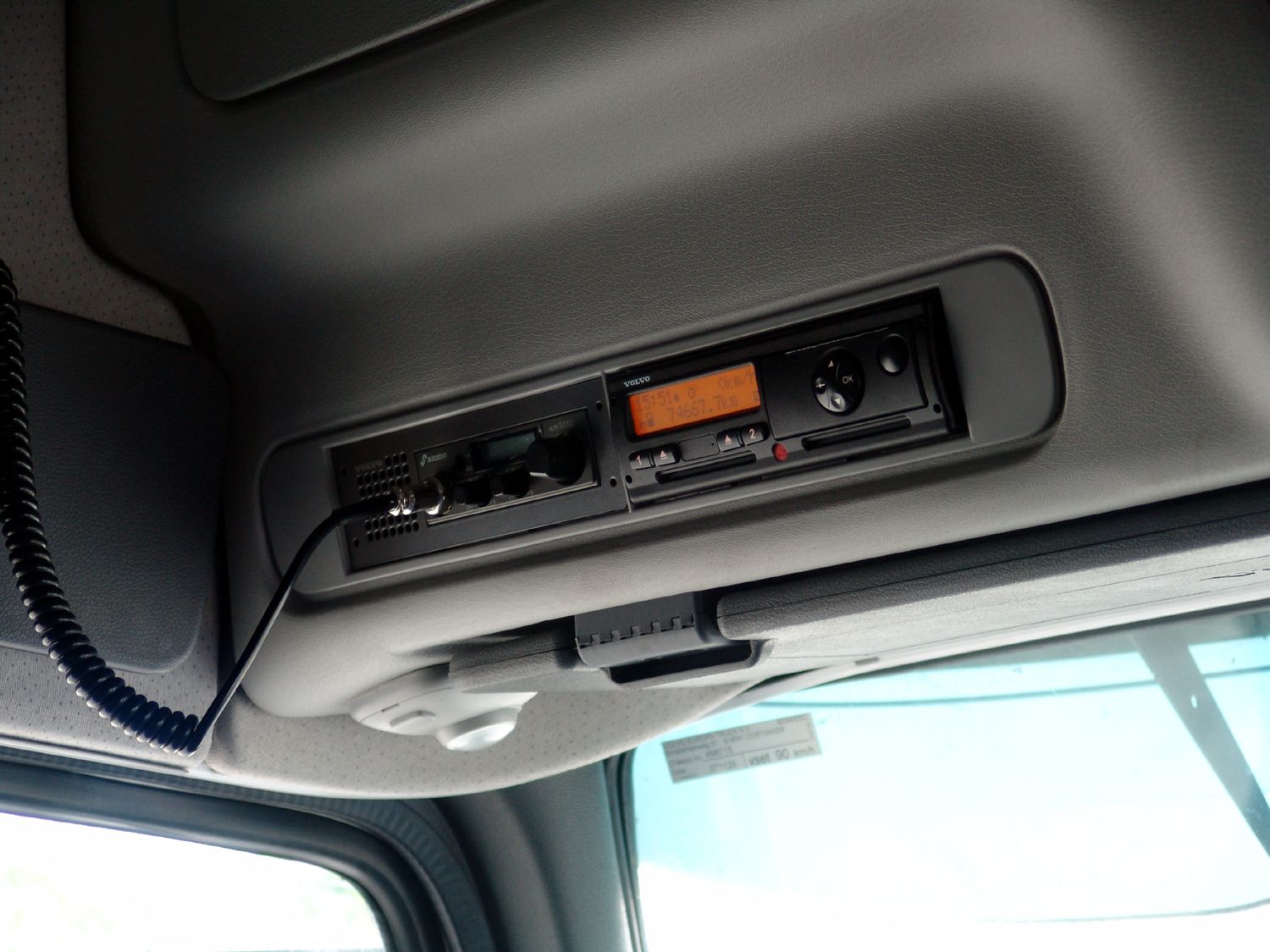
A driver’s shift is governed by four clocks, and they do not run in step. Regulation (EC) No 561/2006 caps how long the wheels may turn. Directive 2002/15/EC caps how long the driver may be at work, through the national law each Member State had to enact to give it effect. Regulation (EU) No 165/2014 decides what has to be provable at the kerb, and Directive 2006/22/EC decides how often that proof is checked and how gravely a breach is weighted once it is found — what the breach then costs is set nationally. A rota can sit inside the driving limits and still breach the working time limits, which is why a fleet planning a week against 56 hours is planning against the wrong number.
Regulation (EC) No 561/2006 is in force; its most recent consolidated text is dated 31 December 2024, after amendment by Regulation (EU) 2020/1054 and Regulation (EU) 2024/1258.
Which vehicles the rules reach
Article 2(1) applies the Regulation to the carriage of goods where the maximum permissible mass of the vehicle, including any trailer or semi-trailer, exceeds 3.5 tonnes, and to the carriage of passengers by vehicles constructed or permanently adapted for carrying more than nine persons including the driver. Point (aa), inserted by Regulation (EU) 2020/1054, has applied since 1 July 2026 to goods in international transport operations or in cabotage operations where that mass exceeds 2.5 tonnes. That date has passed, so for international and cabotage goods work the threshold is 2.5 tonnes today; 3.5 remains the figure for everything else.
Scope has a territorial edge as well as a mass one, and it is the half most often skipped. Article 2(2) applies the Regulation, irrespective of the country of registration of the vehicle, to carriage undertaken exclusively within the Community, or between the Community, Switzerland and the countries party to the Agreement on the European Economic Area. Article 2(3) then provides that the AETR applies instead of the Regulation to international road transport operations undertaken in part outside those areas: for the whole journey where the vehicle is registered in the Community or in a country that is a contracting party to the AETR, and only for the part of the journey on Community or AETR territory where it is registered in a third country that is not a contracting party. A tour or a trunk run that leaves those areas is not simply 561/2006 with extra steps; for the operations Article 2(3) names, a different instrument governs.
Article 3 takes work back out. Regular passenger services on a route not exceeding 50 kilometres are outside the Regulation entirely, as are vehicles or combinations of vehicles with a maximum permissible mass not exceeding 7.5 tonnes used for the non-commercial carriage of goods. Point (aa) exempts vehicles or combinations of vehicles up to 7.5 tonnes used either for carrying materials, equipment or machinery for the driver’s use in the course of the driver’s work, or for delivering goods which are produced on a craft basis — in both limbs only within a 100 km radius from the base of the undertaking, and only on condition that driving the vehicle does not constitute the driver’s main activity and the transport is not carried out for hire or reward. The craft limb is easy to lose: a maker delivering their own output inside that radius is outside the Regulation as surely as a tradesman carrying a toolkit.
Point (ha), inserted by the same 2020 amendment as the 2.5-tonne extension, is the carve-out on the band that extension created. Vehicles with a maximum permissible mass, including any trailer or semi-trailer, exceeding 2.5 but not exceeding 3.5 tonnes used for the transport of goods stay outside the Regulation where the transport is not effected for hire or reward but on the own account of the company or the driver, and where driving does not constitute the main activity of the person driving. The extension therefore bites on hire-or-reward international and cabotage work in that band; carriage that satisfies both of point (ha)’s conditions stays outside it.
The four driving limits
Article 4 defines what is counted before Article 6 limits it: a week runs from 00.00 on Monday to 24.00 on Sunday, and a driving period is the accumulated driving between one rest or break and the next.
| Article | Limit | What it counts |
|---|---|---|
| 6(1) | 9 hours | Daily driving time |
| 6(1) | 10 hours, twice a week | Extended daily driving time |
| 6(2) | 56 hours | Weekly driving time |
| 6(3) | 90 hours | Driving in any two consecutive weeks |
| 7 | 4½ hours | Driving period before a break falls due |
| 8(6) | Six 24-hour periods | Maximum interval before the next weekly rest starts |
Two sums here are ours, not the Regulation’s. Four days at nine hours plus the two permitted days at ten come to exactly 56, so a six-day driving week reaches the Article 6(2) ceiling with nothing to spare and the twice-weekly extension buys no extra weekly capacity at all. And because Article 6(3) caps two consecutive weeks at 90 hours, a week driven flat out at 56 leaves 34 for the week after it. Article 6(4) closes the obvious escape: daily and weekly driving times include all driving time on the territory of the Community or of a third country. That is a rule about what counts towards the totals, not about which journeys the Regulation governs — Article 2 settles that, and where an international operation runs in part outside the Community, Switzerland and the EEA, Article 2(3) puts the AETR in this Regulation’s place on the terms set out above.
Breaks
Article 7 requires an uninterrupted break of not less than 45 minutes after a driving period of four and a half hours, unless the driver takes a rest period instead. It may be replaced by a break of at least 15 minutes followed by a break of at least 30 minutes — that order, and not the reverse.
Two exceptions sit in the same article. A driver engaged in multi-manning may take the 45 minutes in a vehicle being driven by another driver, provided the one taking the break is not assisting the one driving. And since 2024 a driver engaged in an occasional passenger service may instead take two breaks of at least 15 minutes each — a replacement of the 45 minutes rather than a subdivision of it, and written for occasional passenger work only.
Daily rest
Article 4(g) puts a regular daily rest period at 11 hours or more, or alternatively at two blocks — an uninterrupted 3 hours followed by an uninterrupted nine. A reduced daily rest period is at least nine hours but less than 11.
Article 8(2) sets the window: within each period of 24 hours after the end of the previous daily or weekly rest period, a new daily rest must have been taken, and where the portion falling inside that window is at least nine but under 11 hours it counts as a reduced one. Article 8(4) allows at most three reduced daily rest periods between any two weekly rest periods. For multi-manning, Article 8(5) stretches the window to 30 hours and requires a new daily rest of at least nine hours inside it — which is why a two-driver crew covers ground a single driver cannot.
Weekly rest, and the six-day frame
A regular weekly rest period is at least 45 hours; a reduced one may be cut to a minimum of 24 consecutive hours. Article 8(6) requires that in any two consecutive weeks a driver takes either two regular weekly rest periods, or one regular and one reduced of at least 24 hours — and that a weekly rest period starts no later than the end of six 24-hour periods from the end of the previous one.
A derogation in the same paragraph lets a driver engaged in international transport of goods take two consecutive reduced weekly rest periods outside the Member State of establishment, provided that in any four consecutive weeks the driver takes at least four weekly rest periods of which at least two are regular. It is written for goods, and only for a driver who starts both reduced rests outside both the state of establishment and the country of residence.
Reductions are not free. Article 8(6b) requires any reduction to be compensated by an equivalent rest taken en bloc before the end of the third week following, attached under Article 8(7) to another rest period of at least nine hours. Article 8(8) rules the cab out for the regular weekly rest and for any weekly rest of more than 45 hours taken in compensation: those go in suitable gender-friendly accommodation with adequate sleeping and sanitary facilities, at the employer’s cost. Article 8(8a) obliges the undertaking to organise work so that within each period of four consecutive weeks the driver is able to return either to the employer’s operational centre — the one where the driver is normally based and where the driver’s weekly rest period begins, in the Member State of the employer’s establishment — or to the driver’s place of residence, in order to spend there at least one regular weekly rest period or a weekly rest period of more than 45 hours taken in compensation for a reduced one. The undertaking must document how it fulfils that obligation and keep the documentation at its premises for control authorities. Both are cost lines, and belong with the rest of what a tractor costs to run.
The coach exceptions, rewritten in 2024
Regulation (EU) 2024/1258 entered into force on the twentieth day after its publication in the Official Journal of 2 May 2024; EUR-Lex dates the consolidated text it produced 22 May 2024, which is our reading of that count and not a date printed in the Regulation.
It inserted Article 8(2a): on a single occasional passenger service lasting at least six consecutive 24-hour periods a driver may, once, take the daily rest within 25 hours rather than 24, provided accumulated driving that day has not exceeded seven hours; on a service of at least eight consecutive 24-hour periods the derogation may be used twice. It also rewrote Article 8(6a): it deleted point (a) and replaced the introductory phrase, so that the twelve-day postponement of the weekly rest, previously tied to a single occasional service of international carriage of passengers, now reads on a single occasional passenger service, national or international.
What it did not do is remove the conditions. Points (b), (c) and (d) survive in the consolidated text, and a coach schedule has to clear all three. Point (b) requires that after using the derogation the driver takes either two regular weekly rest periods, or one regular weekly rest period and one reduced of at least 24 hours, the reduction compensated by an equivalent period of rest taken en bloc before the end of the third week following the end of the derogation period. Point (c) requires the vehicle to be fitted with recording equipment meeting the specification the paragraph names — Annex IB to Regulation (EEC) No 3821/85, an instrument since repealed by Regulation (EU) No 165/2014. Point (d) is the one that shapes the rota: if there is driving during the period from 22.00 to 06.00, the vehicle must be multi-manned or the driving period referred to in Article 7 must be reduced to three hours.
Article 16(4) is the enforcement half of that bargain. Until a digital journey form exists, a driver relying on those coach derogations must carry a completed journey form supplied by the undertaking before each journey, plus copies covering the previous 28 days and, from 31 December 2024, the previous 56 days. The other half of what 2024/1258 did sits outside the coach provisions altogether: it replaced the first subparagraph of Article 19(2) of 561/2006, so that a Member State must enable its authorities to impose a penalty on an undertaking or a driver for an infringement of 561/2006 or of Regulation (EU) No 165/2014 detected on its territory and not already penalised, even where the infringement was committed on the territory of another Member State or of a third country. A tachograph breach committed two borders away is now chargeable at the first kerb it is found on. Tour work is costed against this as much as against a coach specification sheet or the wider obligations that shape bus and coach operating cost.
Working time is the other clock
Directive 2002/15/EC is in force and unamended, and it counts something different. Article 3(a)1 defines the working time of a mobile worker as the time from the beginning to the end of work during which the worker is at his workstation, at the disposal of the employer and exercising his functions or activities — that qualifier is the test, and the list that follows is illustrative of it rather than a substitute for it. The listed activities are driving, loading and unloading, assisting passengers boarding and disembarking from the vehicle, cleaning and technical maintenance, and all other work intended to ensure the safety of the vehicle, its cargo and passengers or to fulfil the legal or regulatory obligations directly linked to the specific transport operation under way, including monitoring of loading and unloading and administrative formalities with police, customs and immigration officers. Alongside them the Directive counts the times the worker cannot dispose freely of his time and is required to be at his workstation ready to take up normal work, in particular waiting to load or unload where the foreseeable duration is not known in advance.
Three things are expressly outside it, and the same point of Article 3(a) says so: the break times of Article 5, the rest times of Article 6, and the periods of availability defined in Article 3(b). That last carve-out is what stops waiting being counted wholesale. A period of availability is one in which the worker is not required to remain at his workstation but must be available to answer any call to start or resume driving or to carry out other work, and whose foreseeable duration is known to him in advance; the Directive names waiting at frontiers, waiting due to traffic prohibitions, and time accompanying a vehicle carried by ferryboat or by train. A second limb adds, for mobile workers driving in a team, the time spent sitting next to the driver or on the couchette while the vehicle is in motion. Article 3(a)2 applies the same definition to a self-employed driver, at the disposal of the client rather than an employer, but excludes general administrative work that is not directly linked to the specific transport operation under way.
These are minimum requirements addressed to Member States rather than rules binding an operator directly. Articles 4, 5 and 7 each open with “Member States shall take the measures necessary to ensure that”, and Article 14(1) set the transposition deadline at 23 March 2005, so the figures bite through national law. Article 4(a) caps average weekly working time at 48 hours; a single week may reach 60 only if the average over four months stays at or below 48 — though Article 8 allows derogation from Article 4 by collective agreement, by agreement between the social partners, or failing that by law, regulation or administrative provision, provided the reference period for that average does not exceed six months. Four months is the default, not the ceiling. Article 5 adds a break the driving rules do not: no more than six consecutive hours of work without one, of at least 30 minutes where the working day totals between six and nine hours and at least 45 minutes above nine. Article 7(1) caps daily working time at ten hours in each 24-hour period where night work is performed, night time being at least four hours between 00.00 and 07.00 as national law defines it. And Article 10 preserves each Member State’s right to apply or introduce provisions more favourable to the health and safety of the people covered, so the number a rota actually has to clear can be stricter than any of these.
Article 6(2) of Regulation (EC) No 561/2006 says in terms that weekly driving must not cause the maximum weekly working time in Directive 2002/15/EC to be exceeded. That is where the 56-hour figure stops being useful: it leaves almost nothing for the loading and unloading, the boarding and the cleaning, the customs and police formalities tied to the job in hand, and the waiting of unforeseeable length that the Directive also counts as work.
What has to be provable
Article 36 of Regulation (EU) No 165/2014 sets what the driver produces on request: the driver card, and the record sheets, manual records and printouts covering the current day and the preceding 56 days. That record is part of what a buyer inherits, along with the tachograph generation fitted and everything else worth checking before committing to a second-hand truck.
Directive 2006/22/EC sets the enforcement floor. Article 2(3) requires each Member State to check at least 3 % of days worked by drivers in scope, not less than 30 % of them at the roadside and not less than 50 % at the premises of undertakings. Annex III, replaced in 2024 by Commission Delegated Directive (EU) 2024/846, grades what is found: Article 9(3) calls it an initial list of infringements of Regulation (EC) No 561/2006 and Regulation (EU) No 165/2014 and their weighting of gravity, and its purpose is to feed the risk rating system every Member State must run under Article 9(1) — undertakings with a high rating get checked more closely and more often. Exceeding nine hours of daily driving by 50 % or more — 13h30 and above — is a most serious infringement, as is 15 hours where the extension to ten was allowed, 70 hours in a week, and 112h30 across two consecutive weeks. Driving six hours or more before taking the break is a very serious infringement.
What the infringement costs is a separate question with a national answer. Article 19(1) of Regulation (EC) No 561/2006 leaves Member States to lay down the rules on penalties, requiring only that they be effective and proportionate to the gravity of the infringement as indicated in Annex III, as well as dissuasive and non-discriminatory, and that no single infringement be subject to more than one penalty or procedure. Directive 2002/15/EC works the same way: Article 11 leaves the system of penalties for breaches of the national provisions adopted under it to the Member State. The European instruments grade; the Member State charges.
The derogations a planner can use
Article 12 allows a departure from Articles 6 to 9 to the extent needed to reach a suitable stopping place safely, with the reason written on the record sheet or printout. Since 2020 it also allows daily and weekly driving time to be exceeded by up to one hour in exceptional circumstances to reach the operational centre or the driver’s residence for a weekly rest, and by up to two hours where an uninterrupted 30-minute break was taken immediately beforehand and the object is a regular weekly rest. Either extension is compensated en bloc by the end of the third week following.
Article 9 handles ferries and trains: a regular daily rest or a reduced weekly rest taken while accompanying the vehicle may be interrupted not more than twice by other activities totalling no more than one hour, with a sleeper cabin, bunk or couchette available. For a regular weekly rest both conditions must hold: the journey scheduled for 8 hours or more, and a sleeper cabin available.
Article 11 lets a Member State impose longer breaks and rests or shorter driving times for carriage wholly within its territory, and Article 13(1) lists derogations a state may choose to grant. A rota that clears the Regulation can still fail in the country it is worked in.
Quick answers
- How many hours a day can a truck or bus driver drive in the EU?
- Nine. Article 6(1) of Regulation (EC) No 561/2006 caps daily driving time at nine hours, and allows it to be extended to at most 10 hours not more than twice during the week.
- How long can a driver drive before a break is due?
- Four and a half hours. Article 7 requires an uninterrupted break of not less than 45 minutes after a driving period of four and a half hours, unless the driver takes a rest period instead. The 45 minutes may be replaced by a break of at least 15 minutes followed by a break of at least 30 minutes, in that order.
- What are the weekly and fortnightly driving limits?
- 56 hours and 90 hours. Article 6(2) caps weekly driving time at 56 hours and adds that it must not cause the maximum weekly working time in Directive 2002/15/EC to be exceeded; Article 6(3) caps total accumulated driving during any two consecutive weeks at 90 hours.
- How long is a daily rest period?
- At least 11 hours. Article 4(g) defines a regular daily rest period as at least 11 hours, which may alternatively be taken in two periods — an uninterrupted 3 hours followed by an uninterrupted 9. A reduced daily rest period is at least nine but less than 11 hours, and Article 8(4) allows at most three of them between any two weekly rest periods.
- Can a driver spend the weekly rest in the cab?
- Not a regular one. Article 8(8) of Regulation (EC) No 561/2006 says regular weekly rest periods, and any weekly rest period of more than 45 hours taken in compensation for earlier reduced ones, shall not be taken in a vehicle but in suitable gender-friendly accommodation with adequate sleeping and sanitary facilities, at the employer's cost. Reduced weekly rest periods are not caught by that prohibition.
Sources
- Regulation (EC) No 561/2006 on the harmonisation of certain social legislation relating to road transport — consolidated text of 31 December 2024 — EUR-Lex, European Union
- Regulation (EU) 2024/1258 amending Regulation (EC) No 561/2006 as regards minimum requirements on minimum breaks and daily and weekly rest periods in the occasional passenger transport sector and as regards Member States' power to impose penalties for infringements of Regulation (EU) No 165/2014 committed in another Member State or in a third country — EUR-Lex, European Union
- Regulation (EU) 2020/1054 amending Regulation (EC) No 561/2006 and Regulation (EU) No 165/2014 — EUR-Lex, European Union
- Directive 2002/15/EC on the organisation of the working time of persons performing mobile road transport activities — EUR-Lex, European Union
- Directive 2006/22/EC on minimum conditions for the implementation of Regulations (EC) No 561/2006 and (EU) No 165/2014 — consolidated text of 20 June 2024, Article 9 and Annex III as replaced by Commission Delegated Directive (EU) 2024/846 — EUR-Lex, European Union
- Regulation (EU) No 165/2014 on tachographs in road transport — consolidated text of 31 December 2024, Articles 34 and 36 — EUR-Lex, European Union
- Driving time and rest periods — European Commission, Directorate-General for Mobility and Transport