operating
Bus and coach passenger rights: what the 250 km test decides
Regulation (EU) No 181/2011 attaches to the service, not to the vehicle: what the 250 km test decides, what survives below it, and which duties an occasional service never carries.
Regulation (EU) No 181/2011 attaches to the service, not to the vehicle. The same coach with the same driver can run one journey under the full regime, the next under a short closed list, and a third under a regime with no delay rights and no enforcement body at all. Article 2 decides which, and none of it asks anything about the bus. The Regulation is in force and has applied since 1 March 2013 under Article 34.
The scope test asks nothing about the vehicle
Article 2(1) brings a service inside the full regime on two conditions taken together: it must be a regular service “for non-specified categories of passengers” where “the boarding or the alighting point of the passengers is situated in the territory of a Member State”, and “the scheduled distance of the service is 250 km or more”. Either end of the journey satisfies the geography; the distance condition then has to be met as well.
Article 3(a) defines regular services as carriage “at specified intervals along specified routes, passengers being picked up and set down at predetermined stopping points”. What it never defines is the qualifier. Regulation (EC) No 1073/2009, on market access rather than passenger rights, defines “special regular services” at Article 2(3) as regular services “which provide for the carriage of specified categories of passengers to the exclusion of other passengers”. Setting the one phrase beside the other is our reading: neither instrument cites the other.
Article 2(7) closes off the vehicle question outright — nothing here is to be understood as conflicting with or adding to legislation on technical requirements for buses and coaches or for equipment at stops and terminals. Construction belongs to UN Regulation No. 107, under bus accessibility and coach specifications; the paperwork proving one vehicle’s history belongs to buying a used coach.
What survives below 250 kilometres
Article 2(2) does not switch the Regulation off on shorter regular services. It keeps a closed list alive, in the Article’s own order.
| Provision | What it obliges |
|---|---|
| Article 4(2) | Contract conditions and tariffs offered without discrimination on nationality or place of establishment |
| Article 9 | No refusal of a reservation, ticket or boarding on grounds of disability or reduced mobility, and no extra cost |
| Article 10(1) | The two grounds on which refusal is nonetheless permitted |
| Article 16(1)(b) | Training or instruction of personnel, drivers included, dealing directly with the travelling public |
| Article 16(2) | The Member State option to exempt driver training for a limited period |
| Article 17(1) and (2) | Liability for lost or damaged wheelchairs, other mobility equipment or assistive devices, at the cost of replacement or repair |
| Articles 24 to 28 | Travel information, information on rights, a complaint mechanism and its deadlines, and national enforcement bodies |
The omissions are the substance of it. The Article 4(1) duty to issue a ticket is not there; neither is the Article 7 accident floor, nor the assistance duties of Articles 12 to 15, nor Chapter IV, the whole delay and cancellation regime. An urban route and a 200 km regional link are governed by the same seven entries, and one of the seven is spent: Article 16(2) allowed the driver-training exemption “for a maximum period of 5 years from 1 March 2013”, closing that window on 1 March 2018 by our arithmetic.
The Commission’s list of designated terminals shows Malta relying on this cut: it “did not designate any bus terminals because there are no long-distance (more than 250 km) regular services in Malta”. The Regulation’s own threshold is 250 km or more, not more than 250 km.
Occasional services are a third regime
Article 2(3) reaches occasional services — Article 3(b) defines them as services outside the regular definition whose main characteristic is “the carriage by bus or coach of groups of passengers constituted on the initiative of the customer or the carrier himself” — “with the exception of Articles 9 to 16, Article 17(3), and Chapters IV, V and VI”. Its geographic test is worded differently from Article 2(1): the initial boarding point or the final alighting point of the passenger must be in a Member State.
Reading that exception list against the Regulation’s own headings, which is our arithmetic and not a list it prints, a private hire keeps Article 4 on tickets and non-discrimination, Article 5 on liability for performing carriers, Article 6 on the exclusion of waiver, Articles 7 and 8 on accidents, and Article 17(1) and (2) on mobility equipment. It loses the rest of the disability chapter, the delay and cancellation chapter, the information and complaints chapter, and the enforcement chapter — there is no national enforcement body route on an occasional service at all. One vehicle, one driver, three answers, decided by how the service was sold.
Two thresholds for the same disruption
Article 19(1) triggers on a departure from a terminal that the carrier reasonably expects to be cancelled or delayed “for more than 120 minutes”, or on overbooking. The passenger must then immediately be offered a choice between continuation or re-routing to the final destination, “at no additional cost and under comparable conditions, as set out in the transport contract, at the earliest opportunity”, and reimbursement of the ticket price plus, where relevant, a free return to the first point of departure. Being carried on to the destination by the service itself is the first limb of that offer and not a weaker form of re-routing: the Article is headed “Continuation, re-routing and reimbursement”, and Article 19(4) names all three again in extending them to a bus stop at the same 120 minutes. Article 19(2) makes failure to offer the choice cost 50 % of the ticket price on top of the reimbursement, within one month of the request; Article 19(5) puts the reimbursement itself at 14 days.
Care runs on a different clock. Article 21 requires snacks, meals or refreshments and, where a stay of one or more nights becomes necessary, accommodation — but only on “a journey of a scheduled duration of more than 3 hours”, and only where the delay or cancellation at a terminal exceeds 90 minutes. Care therefore falls due 30 minutes before the right to re-routing does, and only on the longer journeys — that comparison is ours. Article 21 names a terminal and not a bus stop, and its accommodation may be capped at EUR 80 per night for two nights.
Both clocks stop for one class of ticket. Article 23 is headed “Exemptions” and carries two paragraphs, and the first is the one that decides whether either threshold is reached at all: Articles 19 and 21 “shall not apply to passengers with open tickets as long as the time of departure is not specified, except for passengers holding a travel pass or a season ticket”. An undated open ticket therefore carries neither the re-routing regime nor the care regime, however long the wait; a pass or season ticket keeps both. Article 23(2), the second exemption, is then narrower than it is usually reported: severe weather and major natural disasters excuse only point (b) of Article 21, the accommodation. Refreshments under point (a) and the whole of Article 19 have no weather defence.
The accident figures are floors under national law, not a tariff
Article 7(1) entitles passengers to compensation for death or personal injury and for lost or damaged luggage “in accordance with applicable national law”. Article 7(2) calculates the amount by national law too, and constrains only the ceiling: any maximum limit it provides “shall on each distinct occasion not be less than” EUR 220 000 per passenger and EUR 1 200 per item of luggage. The Regulation sets no payable sum. For damage to wheelchairs, other mobility equipment or assistive devices — three limbs, not two — the same paragraph makes compensation “always be equal to the cost of replacement or repair of the equipment lost or damaged”, with no ceiling at all.
Assistance has two limbs, and only one is a Member State’s to choose
Half the disability chapter turns on a designation the operator does not make: Article 12 has Member States name the terminals where assistance is provided and tell the Commission, which publishes the list. Article 3(m) restricts a terminal to a staffed one “equipped with facilities such as a check-in counter, waiting room or ticket office”, and Article 3(n) makes every other stopping point a bus stop. Only half, because Article 13 has two paragraphs and they are conditioned differently. Article 13(1) requires free assistance to at least the extent of Annex I part (a) “at terminals designated by Member States”; Article 13(2) requires carriers to provide it “on board buses and coaches” to at least part (b), and names no designation at all. Outside a designated terminal the first duty does not attach and the second still does, so a passenger boarding at Munich or Rotterdam loses the terminal limb and keeps the on-board one on any service within scope.
Article 14 is headed “Conditions under which assistance is provided”, and its second condition is routinely read backwards. Assistance is owed on condition that the need is notified at the latest 36 hours before the assistance is needed, and that the persons concerned present themselves at the designated point at the time the carrier stipulated in advance — a time that “shall be no more than 60 minutes before the published departure time, unless a shorter period is agreed between the carrier and the passenger”. The 60 minutes caps how early the carrier may demand attendance; it is not a window the passenger has to hit. Only where the carrier stipulates nothing does the Regulation set the passenger a deadline of its own, and point (b)(ii) puts it as one: “no later than 30 minutes before the published departure time”.
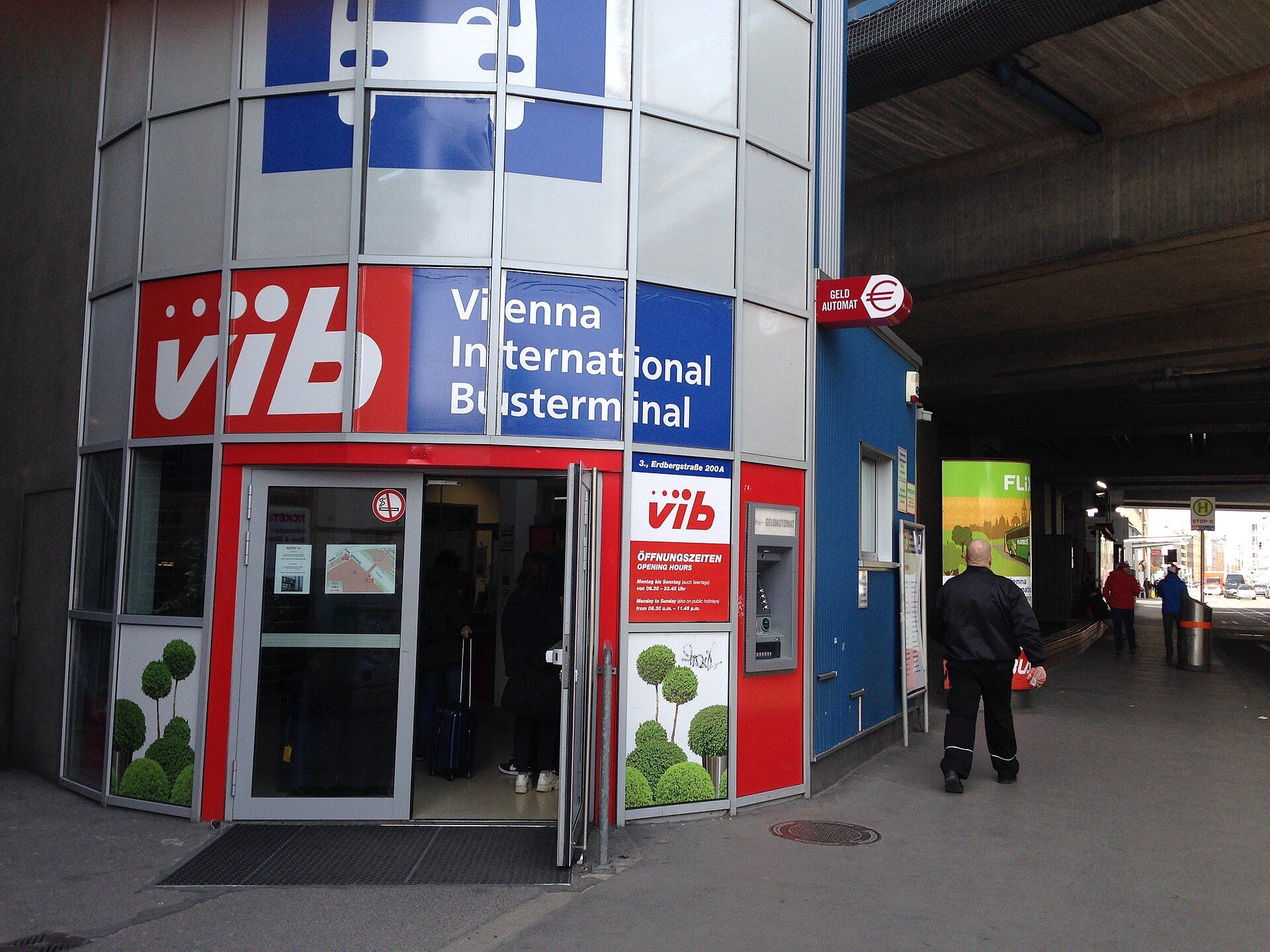
How the designation power has been used varies more than the chapter’s uniform drafting suggests. In the Commission’s version of 16 October 2025 Romania names 87 terminals and Greece 26, while Germany names three — Hamburg, Mannheim and the Stuttgart Airport Busterminal — Austria one, Vienna Erdberg, qualified “only during the opening hours of the terminal”, and the Netherlands one, Amsterdam-Sloterdijk. What that spread moves is the terminal limb alone; the rest of the duty stack sits under bus fleet operating costs.
Two cross-references that no longer point where they say
Article 3(i) defines a tour operator as an organiser or retailer “within the meaning of Article 2(2) and (3) of Directive 90/314/EEC”, and Article 2(8) does two things with the same instrument: it preserves passengers’ rights under that Directive, and it disapplies this Regulation altogether “in case where a package tour referred to in that Directive is cancelled for reasons other than cancellation of a regular service”. The second limb is a scope rule and not a saving clause: where it bites, the Regulation does not reach the case at all, whatever the distance and whoever the carrier. EUR-Lex records Council Directive 90/314/EEC as “No longer in force, Date of end of validity: 30/06/2018; Repealed and replaced by 32015L2302”. Its successor, Directive (EU) 2015/2302, is in force, and its Article 29 disposes of the pointer: references to the repealed Directive “shall be construed as references to this Directive” and read against the Annex III correlation table, which maps Article 2(2) to point 8 of Article 3, “organiser”, and Article 2(3) to point 9, “retailer”. The definition still works, through a different instrument from the one it names.
Article 33, which added the Regulation to the Annex of Regulation (EC) No 2006/2004, has been overtaken outright: EUR-Lex records it as implicitly repealed by Regulation (EU) 2017/2394 and dates that partial end of validity to 16 January 2020. The successor is in force: its Article 41 repealed 2006/2004 “with effect from 17 January 2020”, its Article 42 applies it from the same day, and it carries 181/2011 at point 19 of its own Annex. One of the Regulation’s 34 articles is therefore gone while the Regulation itself is not.
The exemptions have run out — but not all of them
Article 2(4) let Member States exempt domestic regular services from everything except the Article 2(2) list, and Article 2(5) let them exempt particular regular services a significant part of which, including at least one scheduled stop, is operated outside the Union — both capped at four years from the date of application, renewable once. The Commission’s report of 27 September 2016 records twelve Member States then applying the first and thirteen the second, and dates the first period as ending on 28 February 2017 at the latest. Its road passenger rights page now states that “since 1 March 2021, there are no exemptions from the Regulation”.
Article 18(1) is a separate power and reads differently. It lets a Member State exempt domestic regular services from all or some of the disability chapter, without prejudice to Article 2(2), provided national rules give a level of protection “at least the same as under this Regulation”. No period is attached to it, and set against the express four-year cap in Article 2(4) that silence is the point — the observation is ours.
What is changing
COM(2023) 753 of 29 November 2023 would amend five passenger rights Regulations together, 181/2011 among them, as regards enforcement — the layer Articles 26 and 27 now cover, giving the passenger three months to complain and the carrier three to reply. It is not law: the Legislative Observatory records the stage reached as “Awaiting Parliament’s position in 1st reading”, the responsible committee approving the text agreed in first-reading negotiations on 2 September 2026, and an indicative plenary sitting date of 19 October 2026. Until that vote and the Council’s, the tests above bind.
Quick answers
- When do EU bus passenger rights apply in full?
- Under Article 2(1) of Regulation (EU) No 181/2011, on a regular service for non-specified categories of passengers where the boarding or the alighting point is in the territory of a Member State and the scheduled distance of the service is 250 km or more. Both conditions have to hold; either end of the journey satisfies the geography.
- How long does a coach have to be delayed before passengers can claim?
- Only on a regular service for non-specified categories of passengers whose scheduled distance is 250 km or more. Articles 19 and 21 sit in Chapter IV, which the Article 2(2) list that survives below 250 km leaves out entirely and which Article 2(3) excepts from occasional services — so a shorter regular route and a private hire carry no delay right at all. Within scope, Article 19(1) gives the passenger an immediate choice between continuation or re-routing to the final destination, at no additional cost and under comparable conditions, and reimbursement of the ticket price, where the carrier reasonably expects a departure from a terminal to be cancelled or delayed by more than 120 minutes, or in the case of overbooking. Article 21 sets a lower threshold for care — 90 minutes — but only on a journey of a scheduled duration of more than three hours. Article 23(1) switches both Articles off for a passenger holding an open ticket as long as the time of departure is not specified, unless the ticket is a travel pass or a season ticket.
- What compensation does the Regulation set for a bus accident?
- On the services Article 7 reaches — a regular service for non-specified categories of passengers of 250 km or more under Article 2(1), and an occasional service under Article 2(3), the Article being absent from the Article 2(2) list that survives below 250 km — none directly. Article 7(1) leaves compensation to applicable national law, and Article 7(2) constrains only the ceiling: any maximum limit set by national law must not be less than EUR 220 000 per passenger and EUR 1 200 per item of luggage on each distinct occasion. For wheelchairs, other mobility equipment or assistive devices the compensation is always the cost of replacement or repair.
- Do passenger rights apply to a private coach hire?
- Only in part. Article 2(3) applies the Regulation to occasional services with the exception of Articles 9 to 16, Article 17(3) and Chapters IV, V and VI — so the accident provisions and the ticket and non-discrimination rules reach a hire, while the delay and cancellation chapter, the complaints chapter and the enforcement chapter do not.
- Are any Member States still exempt from the bus passenger rights Regulation?
- The Commission's road passenger rights page states that since 1 March 2021 there are no exemptions from the Regulation, and that exemptions were applied before that date. The separate exemption in Article 18(1), which lets a Member State lift some or all of the disability chapter from domestic regular services where national protection is at least equivalent, carries no expiry date.
Sources
- Regulation (EU) No 181/2011 concerning the rights of passengers in bus and coach transport — full text (Articles 2, 3, 7, 8, 12 to 14, 16 to 21, 23, 26 to 28, 33 and 34, and Annexes I and II) — EUR-Lex, Official Journal of the European Union L 55, 28.2.2011
- Regulation (EU) No 181/2011 — document information (status: In force; partial end of validity 16/01/2020, Article 33 implicitly repealed by 32017R2394; amendment proposed by 52023PC0753) — EUR-Lex, Official Journal of the European Union
- Council Directive 90/314/EEC on package travel — document information (status: No longer in force, end of validity 30/06/2018, repealed and replaced by 32015L2302) — EUR-Lex, Official Journal of the European Union
- Directive (EU) 2015/2302 on package travel and linked travel arrangements — Article 3 points 8 and 9, Article 29 and the Annex III correlation table — EUR-Lex, Official Journal of the European Union L 326, 11.12.2015
- Regulation (EU) 2017/2394 on consumer protection cooperation — document information and Annex point 19 (in force, applies from 17/01/2020, repealing Regulation (EC) No 2006/2004) — EUR-Lex, Official Journal of the European Union
- Regulation (EC) No 1073/2009 on access to the international market for coach and bus services — consolidated text of 1 July 2013, Article 2 — EUR-Lex, Official Journal of the European Union
- COM(2016) 619 final — Report on the application of Regulation (EU) No 181/2011 concerning the rights of passengers in bus and coach transport — European Commission, Brussels, 27.9.2016
- Road passenger rights (statement that since 1 March 2021 there are no exemptions from the Regulation) — European Commission, Directorate-General for Mobility and Transport
- Designated Bus Terminals to assist persons with reduced mobility and disabilities, updated 16 October 2025 — European Commission, Directorate-General for Mobility and Transport
- Proposal for a Regulation amending Regulations (EC) No 261/2004, (EC) No 1107/2006, (EU) No 1177/2010, (EU) No 181/2011 and (EU) 2021/782 as regards enforcement of passenger rights in the Union, COM(2023) 753 final — EUR-Lex, European Commission
- Procedure file 2023/0437(COD) — Transport: enforcement of passenger rights in the Union (key events and stage reached) — European Parliament, Legislative Observatory